
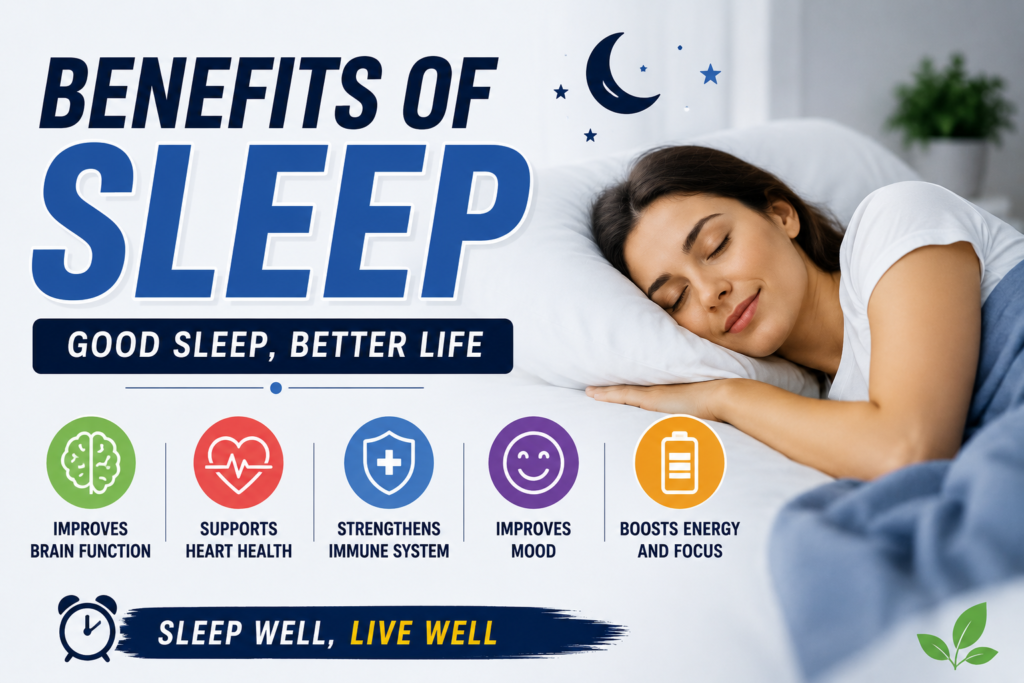
Benefits of Sleep: Why Good Sleep Is Important for Your Health
Sleep is one of the most important parts of a healthy lifestyle. Although the body appears to be resting during sleep, the brain and body continue performing important processes that support physical and mental health.
Good-quality sleep can help with thinking, learning, memory, mood and physical health. On the other hand, regularly getting insufficient or poor-quality sleep can affect concentration, reaction time and overall well-being.
The Benefits of Sleep make healthy sleep an essential part of maintaining a balanced lifestyle.
Why Is Sleep Important?
Sleep gives the body time to recover and supports healthy brain function. During sleep, different systems in the body continue working to maintain physical health.
Sleep also plays an important role in learning and memory. Not getting enough sleep can make it harder to focus, solve problems, make decisions and remember information.
Sleep and Brain Health
One of the major Benefits of Sleep is its relationship with brain function.
A well-rested person may find it easier to concentrate, learn new information and perform daily tasks. Sleep also supports the processes involved in forming and maintaining memories.
When someone is sleep deprived, their thinking and reaction time can become slower, potentially affecting work, school and activities that require attention.
Sleep and Heart Health
Sleep is also connected to cardiovascular health.
During certain stages of sleep, heart rate and blood pressure normally decrease. Over time, insufficient or poor-quality sleep has been associated with a higher risk of several health problems, including high blood pressure, heart disease and stroke.
This does not mean that sleep alone prevents these conditions, but it is an important part of an overall healthy lifestyle.
Sleep and the Immune System
The immune system also interacts with sleep.
Research and health guidance indicate that adequate sleep supports normal immune function, while ongoing sleep deficiency can affect the body’s ability to respond to infections.
Getting enough rest is therefore one part of maintaining overall health.
Sleep and Mood
Sleep can also influence emotional well-being.
When people do not get enough sleep, they may experience irritability, difficulty managing emotions and problems with concentration. Over time, sleep deficiency has also been associated with mental-health difficulties.
A consistent sleep schedule can be helpful for maintaining a healthier daily routine.
How Much Sleep Do Adults Need?
According to the National Heart, Lung, and Blood Institute, most adults generally need 7 to 9 hours of sleep per night. Individual needs can vary, however.
Children and teenagers generally require more sleep than adults because their bodies and brains are still developing.
Simple Ways to Improve Sleep
Developing consistent sleep habits can make it easier to get good-quality rest.
Some helpful habits include:
Go to bed and wake up around the same time each day.
Keep your bedroom quiet, cool and dark.
Give yourself enough time to sleep.
Use the hour before bedtime for relaxing activities.
Avoid caffeine close to bedtime.
Stay physically active during the day.
Limit bright light and stimulating activities before bed.
These habits are among the strategies recommended by the NHLBI for improving sleep.
What Happens When You Don’t Sleep Enough?
Regular sleep deficiency can affect both physical and mental performance.
A person who does not get enough sleep may experience daytime tiredness, difficulty concentrating, slower reactions and problems with decision-making.
Sleep deficiency can also increase the risk of mistakes and accidents, which is particularly important when driving or operating machinery.
Sleep as Part of a Healthy Lifestyle
The Benefits of Sleep become even more meaningful when good sleep is combined with other healthy habits.
Regular physical activity, a balanced diet, stress management and appropriate medical care can all contribute to overall well-being.
Sleep should not be viewed as something that can simply be sacrificed whenever life becomes busy. It is an important part of maintaining the body’s normal physical and mental functions.
When Should You Talk to a Doctor?
Occasional poor sleep can happen to almost anyone. However, persistent problems with falling asleep, staying asleep or excessive daytime sleepiness may require professional evaluation.
Sleep disorders such as insomnia and sleep apnea can affect health and daily functioning and may require medical assessment.
If sleep problems continue or significantly affect daily life, speaking with a healthcare professional is a sensible step.
Final Thoughts
The Benefits of Sleep go far beyond simply feeling rested in the morning.
Quality sleep supports brain function, learning, memory, mood, cardiovascular health and immune function.
For most adults, aiming for around 7–9 hours of sleep and maintaining consistent sleep habits can be an important part of a healthy lifestyle.
Good sleep is not wasted time. It is one of the body’s essential processes for maintaining health, performance and well-being.
Benefits of Sleep are something people can work toward every night by making healthy sleep a regular priority.