
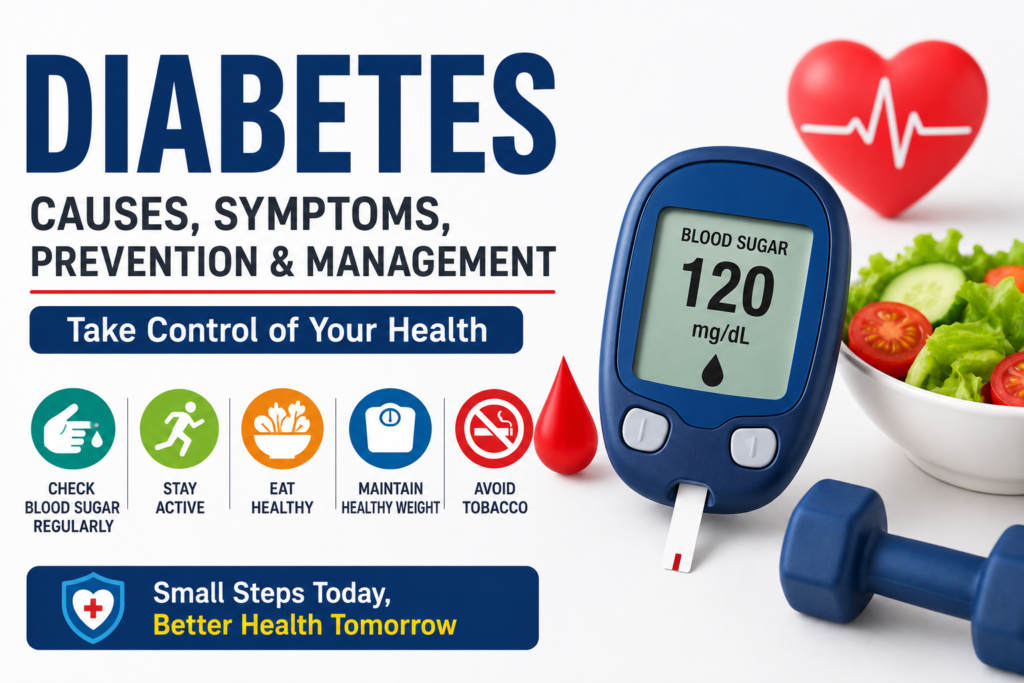
Diabetes: Causes, Symptoms, Types, Prevention and Management
Diabetes is a common chronic health condition that affects how the body regulates blood glucose, also known as blood sugar.
Glucose is an important source of energy for the body. The hormone insulin helps glucose move from the bloodstream into cells where it can be used for energy. In diabetes, the body either does not produce enough insulin or does not use insulin effectively.
According to the World Health Organization, the number of people living with diabetes has increased significantly over recent decades.
What Is Diabetes?
Diabetes occurs when blood glucose levels become too high.
Normally, the body carefully regulates blood sugar using insulin. When this system does not work properly, glucose can remain in the bloodstream instead of entering cells efficiently.
Over time, consistently high blood glucose can damage blood vessels and organs.
Main Types of Diabetes
There are several major types of diabetes.
Type 1 Diabetes
Type 1 diabetes occurs when the immune system attacks the cells in the pancreas that produce insulin.
People with type 1 diabetes need insulin treatment to survive.
It can develop at any age, although it is often diagnosed in children and young adults.
Type 2 Diabetes
Type 2 diabetes is the most common form.
It occurs when the body does not use insulin effectively and, over time, may not produce enough insulin to maintain normal blood glucose levels.
Lifestyle factors, genetics, age and other factors can contribute to the risk of developing type 2 diabetes.
Gestational Diabetes
Gestational diabetes develops during pregnancy.
It can increase health risks for both the mother and baby and may also increase the mother’s risk of developing type 2 diabetes later in life.
Common Symptoms
Some people with Diabetes may experience symptoms such as:
- Increased thirst
- Frequent urination
- Increased hunger
- Unexplained weight loss
- Tiredness
- Blurred vision
- Slow-healing wounds
However, particularly in type 2 diabetes, symptoms may be mild or absent for a long time.
This is one reason regular medical checkups can be important for people at increased risk.
Why Is Diabetes Serious?
Untreated or poorly controlled diabetes can affect many parts of the body.
Over time, high blood glucose can contribute to complications involving the heart, blood vessels, eyes, kidneys and nerves.
Diabetes can also increase the risk of cardiovascular disease and other serious health problems.
The good news is that appropriate management can reduce the risk of many complications.
Diabetes and Healthy Eating
Nutrition plays an important role in diabetes management.
A balanced eating pattern can include vegetables, fruits, whole grains, legumes, lean proteins and appropriate sources of healthy fats.
People with diabetes may need to pay particular attention to carbohydrate intake and portion sizes.
There is no single diet that works for everyone, so people with diabetes may benefit from personalized advice from a doctor or qualified dietitian.
Exercise and Diabetes
Regular physical activity can help improve overall health and can contribute to better blood glucose management.
Walking, cycling, swimming and strength exercises are examples of activities that may be included in a healthy routine.
People using insulin or certain diabetes medicines should discuss exercise and blood-sugar management with their healthcare professional because physical activity can affect glucose levels.
Maintaining a Healthy Weight
For people with type 2 diabetes who are overweight, losing even a modest amount of weight may improve blood glucose control and other health measures.
Healthy weight management generally involves a combination of nutrition, physical activity, sleep and sustainable lifestyle habits.
Extreme diets or rapid weight-loss methods are not appropriate for everyone.
Monitoring Blood Sugar
People with diabetes may need to monitor their blood glucose depending on their type of diabetes and treatment plan.
Monitoring can help individuals and healthcare professionals understand how food, physical activity, medication and other factors affect blood glucose.
The appropriate testing schedule varies from person to person.
Diabetes and Heart Health
Diabetes and cardiovascular health are closely connected.
People with diabetes have an increased risk of cardiovascular disease.
Controlling blood pressure, cholesterol and blood glucose, avoiding tobacco and staying physically active can help reduce cardiovascular risk.
Regular medical care is an important part of diabetes management.
Can Diabetes Be Prevented?
Type 1 diabetes cannot currently be prevented.
However, many cases of type 2 diabetes can be prevented or delayed through lifestyle changes and addressing risk factors.
Regular physical activity, maintaining a healthy weight, eating a balanced diet and avoiding tobacco can contribute to a lower risk.
People at increased risk may also benefit from regular blood glucose screening.
When Should You See a Doctor?
If you experience symptoms such as persistent excessive thirst, frequent urination, unexplained weight loss or unusual tiredness, it is sensible to speak with a healthcare professional.
A doctor can perform appropriate tests to determine whether blood glucose levels are within the normal range.
People who already have diabetes should follow their individualized treatment and monitoring plan.
Living With Diabetes
A diagnosis of Diabetes does not mean that a person cannot live a healthy and active life.
Many people manage diabetes successfully through a combination of medication when needed, healthy eating, physical activity, monitoring and regular medical care.
The most appropriate treatment depends on the type of diabetes and the individual’s health.
Final Thoughts
Diabetes is a serious but manageable chronic condition.
Understanding the symptoms, risk factors and different types can help people recognize the importance of prevention, early detection and appropriate treatment.
Healthy eating, regular physical activity, maintaining a healthy weight and following professional medical advice can all play important roles in diabetes management.
If you are concerned about your blood glucose or have symptoms associated with diabetes, speak with a qualified healthcare professional rather than relying on online information alone.