
Google Readies First Project Suncatcher Satellite to Test AI Chips in Orbit
Google says its first Project Suncatcher prototype, built with Planet and carrying four TPUs, will fly on SpaceX’s Transporter-18 mission to test whether AI hardware can work in orbit.
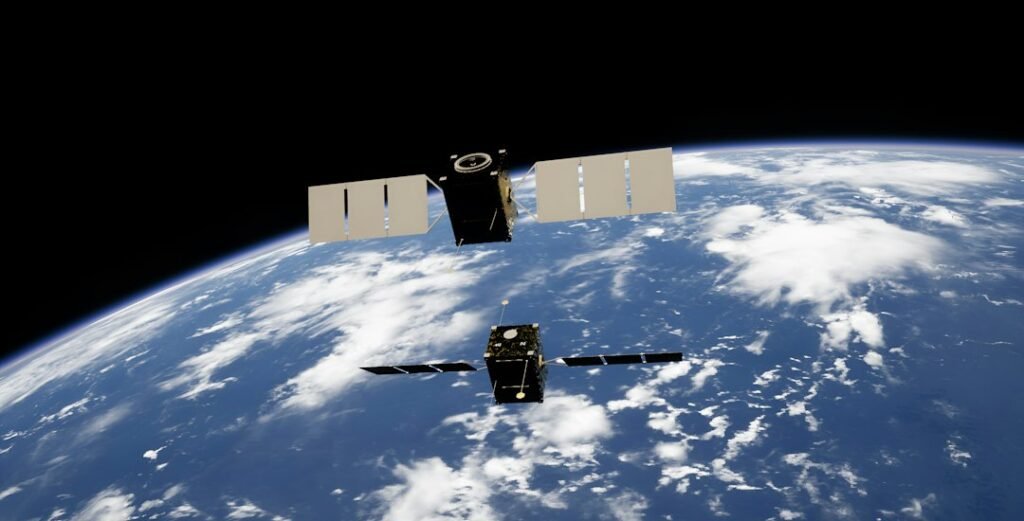
Photo by <a href="https://unsplash.com/@obruta?utm_source=WP+Agent&utm_medium=referral">Kevin Stadnyk</a> on <a href="https://unsplash.com/?utm_source=WP+Agent&utm_medium=referral">Unsplash</a>
Google is about to find out whether its AI chips can survive space. On September 24, 2026, the company said the first hardware test for Project Suncatcher, its research effort to run machine-learning compute on solar-powered satellites, will launch next week aboard SpaceX’s Transporter-18 rideshare mission. Several outlets, including SiliconANGLE and Business Standard, report the scheduled launch date as October 1.
The payload is small: a single prototype satellite built with Earth-imaging company Planet, carrying four of Google’s Tensor Processing Units (TPUs). But the question it is meant to answer is a big one for the AI industry. Power has become one of the tightest constraints on building new AI data centers, and Google is testing whether orbit could one day be part of the answer.
What Happened?
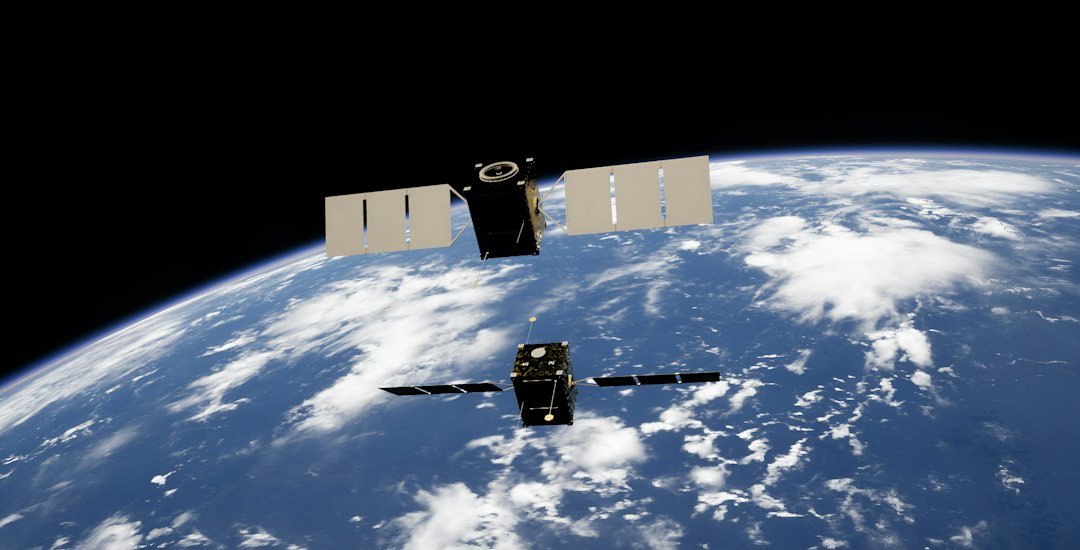
In a post on Google’s official blog, Travis Beals, Senior Director of Google’s Paradigms of Intelligence team, described the upcoming flight as Project Suncatcher’s first test in orbit. The mission is designed to collect real-world data on how Google’s TPUs handle three things that are hard to reproduce fully on the ground: the violent ride to orbit, space radiation, and cooling in a vacuum.
Google first announced Project Suncatcher on November 4, 2025, alongside a preprint research paper. At the time, the company said its next step would be a learning mission with Planet to launch two prototype satellites by early 2027. The new single-satellite flight moves the first in-orbit hardware test ahead of that schedule, while the two-satellite mission is still planned for 2027.
Independent reporting adds more detail. According to SiliconANGLE, the prototype is called MVP, is roughly the size of a refrigerator, and has solar panels that generate about one kilowatt of power. That is a tiny fraction of what a terrestrial AI facility draws, which underlines that this is an engineering experiment rather than a working data center.
Key Facts at a Glance
| Item | Detail | Source |
|---|---|---|
| Announcement | September 24, 2026, Google blog post by Travis Beals | |
| Launch | SpaceX Transporter-18 rideshare, reported for October 1, 2026 | Google; SiliconANGLE; Business Standard |
| Satellite partner | Planet | |
| Payload | Four Google TPUs (Trillium generation tested on the ground) | Google; SiliconANGLE; Gizmodo |
| Power | About 1 kW of solar generation | SiliconANGLE |
| Next milestone | Two satellites in 2027 to test high-bandwidth laser links |
Why This AI Development Matters
The AI boom has turned electricity into a strategic resource. Training and running large models requires dense clusters of accelerators, and new data center projects increasingly depend on securing grid connections, generation capacity, land and water. Google’s core argument for Suncatcher is about energy: the company says satellites in the right low Earth orbit have near-constant sunlight and can generate up to eight times more solar power than the same panels on the ground.
If that advantage could be turned into usable, affordable compute, it would give AI companies a way to add capacity without competing for the same terrestrial power supply. That is a very large “if,” and Google itself frames Suncatcher as a long-term moonshot comparable to its early work on self-driving cars and quantum computing. But the October flight is the first time the idea meets real hardware in real orbit.
Readers following the broader compute race will recognize the pattern. Companies are experimenting with very different ways to get more AI capacity, from large CPU-focused infrastructure deals like Akamai’s agreement with Anthropic to the chip demand that has driven sharp moves in semiconductor stocks. Suncatcher is the most speculative of these bets, but it targets the same bottleneck.
How the Technology Works
Google’s long-term design, laid out in its November 2025 research post, imagines compact clusters of satellites flying very close together, each carrying TPUs and linked by free-space optical (laser) connections. The first mission tests only the most basic piece of that picture: whether the chips work at all once they are in orbit.
Surviving launch
According to Google, a rocket trip to low Earth orbit takes about 10 minutes and subjects a spacecraft to sustained acceleration of up to 10 times the force of gravity. Individual components such as TPU chips can briefly experience 50 to 100 g. Google says it shook the satellite on all three axes to mimic launch vibrations and that the hardware held up.
Handling radiation
Cosmic rays and solar events can corrupt data (a “bit flip”) or damage electronics. Google tested its Trillium TPUs in a proton beam at UC Davis’s Crocker Nuclear Laboratory while they ran AI workloads. The company says the chips withstood a total radiation dose greater than they would receive over a five-year space mission.
The 2025 research post gave more specific numbers. The most sensitive part, the high-bandwidth memory, began showing irregularities only after a cumulative dose of 2 krad(Si), which Google described as nearly three times the expected shielded five-year dose of 750 rad(Si). No hard failures were attributed to total ionizing dose up to 15 krad(Si) on a single chip.
Cooling without air
This may be the hardest problem. AI chips generate a lot of heat in a small area, and in a vacuum there is no airflow to carry it away. Heat has to be moved to radiators and emitted into space. Google says it is testing a combination of heat pipes and radiators and has already evaluated the system in a thermal vacuum chamber on the ground.
The prototype’s cooling will limit how hard the chips can work. SiliconANGLE reports that the TPUs will run workloads only in bursts of roughly 15 minutes before pausing to cool down. That figure comes from press reporting rather than Google’s blog post, so it should be treated as reported detail rather than an official specification.
Linking satellites together
A single satellite with four chips is not a data center. Large AI workloads are spread across thousands of accelerators that must exchange data constantly. Google says future Suncatcher satellites would each carry dozens of TPUs and fly in clusters connected by lasers. Unlike existing space laser systems, which are built for moderate bandwidth over long distances, these links would need very high bandwidth over very short distances while every satellite is moving.
In its 2025 research, Google modeled an illustrative 81-satellite cluster with a radius of about one kilometer at an altitude of 650 km, and reported a bench-scale laser link demonstration that reached 800 Gbps in each direction. The company plans to test inter-satellite laser links in orbit with two satellites in 2027.
What Google and Others Are Saying
Google is deliberately modest about this flight. In its announcement, the company described the mission as a way to learn what works and where the hardware fails, noting that “some things can only be tested in space.” It did not claim the prototype will deliver meaningful compute capacity.
On economics, Google’s 2025 analysis suggested launch prices could fall below $200 per kilogram by the mid-2030s if historical trends continue. At that level, it estimated, launching and operating a space-based data center could become roughly comparable to the energy costs of an equivalent facility on Earth, measured per kilowatt per year. That is a projection built on assumptions about future launch pricing, not a demonstrated result.
Google is not alone. Gizmodo notes that startup Starcloud launched an Nvidia H100 GPU into orbit in November 2025, and both Gizmodo and SiliconANGLE report that SpaceX made space-based AI infrastructure part of its IPO pitch earlier this year. SiliconANGLE also points to Orbital as another startup working on the concept.
What This Means for Users and Businesses
For now, very little changes. There is no orbital AI service to buy, and everyday tools such as Gemini will keep running in terrestrial data centers for the foreseeable future. Google has not announced any commercial product tied to Suncatcher.
The more realistic near-term impact is on planning and investment. Businesses that depend heavily on AI compute are exposed to the same power and capacity constraints that are pushing Google toward experiments like this. Results from the flight, whether positive or negative, will help investors and infrastructure planners judge whether orbital compute deserves serious attention or remains a distant option.
It is also worth separating this from edge computing, which moves processing closer to users on the ground. Space-based compute would do the opposite for many workloads, adding distance and ground-link constraints. Our explainer on how edge computing works covers why latency-sensitive tasks usually stay close to users.
What Is Still Uncertain
- Launch timing: Rideshare launches can slip. Google’s own post says “next week”; the October 1 date comes from press reports.
- Cooling at scale: Cooling four chips on a one-kilowatt satellite is very different from dissipating the heat of a full cluster carrying dozens of TPUs per satellite.
- Networking: The high-bandwidth laser links needed for real AI workloads will not be tested in orbit until 2027.
- Cost: The economic case depends on launch prices falling sharply over the next decade.
- Space environment: Adding large satellite clusters raises questions about orbital congestion and debris that Google’s posts do not address in detail.
What Happens Next?
If the launch goes ahead as reported, the first milestone will simply be confirming that the TPUs powered on and are computing. After that, the useful data will come over months of operation: how often radiation causes errors, how the cooling system performs through repeated thermal cycles, and whether any hardware degrades. Google says it plans to share what it learns, and a new video series from the Suncatcher team is already explaining the engineering behind the mission.
The bigger test comes in 2027, when two satellites attempt to hold precise, high-bandwidth laser links while flying close together. That experiment will say far more about whether orbital AI clusters are practical than a four-chip prototype can.
Conclusion
Project Suncatcher’s first flight is a small, carefully scoped experiment with a large ambition behind it. Google has already shown on the ground that its TPUs can tolerate launch vibration and substantial radiation doses. The orbit test will show whether that holds up in practice and how hard cooling will be. Space-based AI data centers remain a long-term research bet, but after October 1 the debate will finally have in-orbit data to work with.
Sources
- Google (official blog), “Behind Project Suncatcher, our moonshot to put AI in space,” Sept. 24, 2026: blog.google
- Google (official blog), “Meet Project Suncatcher,” Nov. 4, 2025: blog.google
- Google Research, “Exploring a space-based, scalable AI infrastructure system design,” Nov. 4, 2025: research.google
- SiliconANGLE, “Google’s first Project Suncatcher AI satellite set to blast off into orbit next week,” Sept. 24, 2026: siliconangle.com
- Gizmodo, “Google’s Project Suncatcher Is Sending AI Chips Into Space Next Week,” Sept. 24, 2026: gizmodo.com
- Business Standard, “Project Suncatcher: What Google plans to test by taking AI compute to space,” Sept. 25, 2026: business-standard.com







1 thought on “Google Readies First Project Suncatcher Satellite to Test AI Chips in Orbit”