
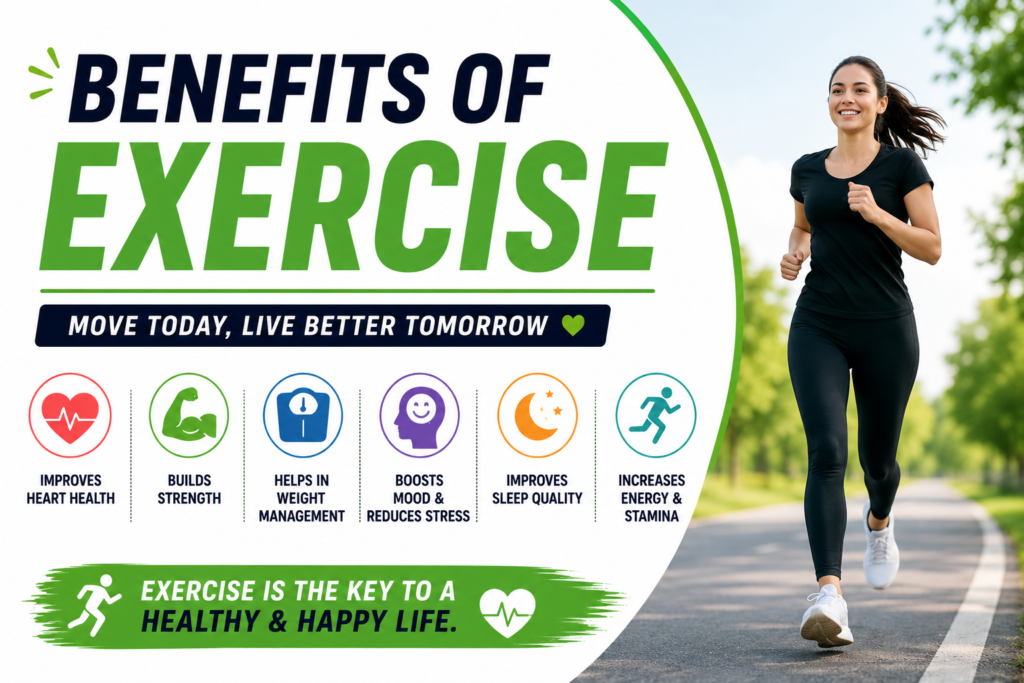
Benefits of Exercise: How Regular Exercise Improves Your Health
Exercise is one of the most important habits for maintaining a healthy lifestyle. Regular physical activity can help people stay fit, maintain strength, support cardiovascular health and improve overall well-being.
Exercise does not necessarily mean spending hours in a gym. Walking, cycling, swimming, jogging, sports and strength training can all be part of an active lifestyle.
The Benefits of Exercise can be experienced by people of different ages and fitness levels when physical activity becomes a regular part of their routine.
Why Is Exercise Important?
The human body is designed to move. Regular physical activity helps maintain physical fitness and can support many important body functions.
People who remain physically active may improve their endurance, strength and ability to perform everyday activities.
Exercise can also be adapted according to a person’s age, fitness level and personal goals.
Exercise and Heart Health
One of the major Benefits of Exercise is its relationship with cardiovascular fitness.
Activities such as brisk walking, cycling and swimming can make the heart work harder and improve aerobic fitness over time.
Regular physical activity is also an important part of a healthy lifestyle that can help reduce the risk of several chronic diseases.
Exercise Can Help Build Strength
Strength training and other resistance exercises can help develop and maintain muscle strength.
Stronger muscles can make everyday activities easier, including lifting objects, climbing stairs and maintaining physical independence.
Strength exercises can include bodyweight movements, resistance bands or weight training.
Exercise and Weight Management
Physical activity uses energy and can contribute to maintaining a healthy body weight.
When combined with balanced nutrition and other healthy habits, regular exercise can support long-term weight management.
However, everyone’s body responds differently to exercise, and healthy weight management involves more than exercise alone.
Exercise and Mental Well-Being
Physical activity is not only beneficial for the body.
Exercise can also support mental well-being and may help people manage stress and improve their mood.
Going for a walk, playing a sport or completing a workout can provide a healthy break from work and daily responsibilities.
Exercise and Better Sleep
Regular physical activity may also support healthy sleep habits.
People who exercise regularly often report improvements in their sleep quality. However, the timing and intensity of exercise can affect individuals differently.
A consistent daily routine that includes physical activity, relaxation and adequate sleep can contribute to overall well-being.
Different Types of Exercise
There is no single type of exercise that everyone needs to follow.
A balanced routine can include different forms of physical activity:
- Walking and jogging for aerobic fitness
- Cycling for cardiovascular activity
- Swimming for full-body movement
- Strength training for muscles
- Stretching for flexibility
- Sports for fitness and enjoyment
Choosing activities that you enjoy can make it easier to stay consistent.
How to Start Exercising
People who are currently inactive do not necessarily need to begin with intense workouts.
Starting with short walks or light activities can be a practical way to introduce more movement into daily life.
You can gradually increase the duration and intensity as your fitness improves.
The most important factor is consistency rather than trying to achieve an extremely difficult workout immediately.
Benefits of Exercise for Older Adults
Physical activity can also be valuable as people get older.
Maintaining strength, mobility and balance can help older adults remain active and independent.
Activities should be appropriate for the individual’s abilities and health condition. Anyone with significant health concerns should consider discussing a new exercise routine with a healthcare professional.
Exercise as Part of a Healthy Lifestyle
The Benefits of Exercise become even greater when physical activity is combined with other healthy habits.
A balanced diet, adequate sleep, stress management, avoiding tobacco and regular healthcare can all contribute to better overall health.
Exercise should therefore be viewed as one important part of a complete healthy lifestyle.
How Much Exercise Do You Need?
The appropriate amount of physical activity can vary depending on age, health and fitness level.
Adults are generally encouraged to get regular moderate or vigorous physical activity throughout the week, along with muscle-strengthening activities.
If you are starting from a very inactive lifestyle, gradually increasing your activity can be a more practical approach than attempting a demanding routine immediately.
Final Thoughts
The Benefits of Exercise extend beyond physical fitness. Regular movement can support heart health, strength, mobility, mental well-being and overall quality of life.
You do not need expensive equipment or a professional gym to become more active. Simple activities such as walking, cycling, stretching or playing a sport can help you move more throughout the day.
The best exercise routine is one that is appropriate for your health, fits your lifestyle and is sustainable over time.
By making physical activity a regular habit, you can make exercise an important part of a healthier lifestyle.