
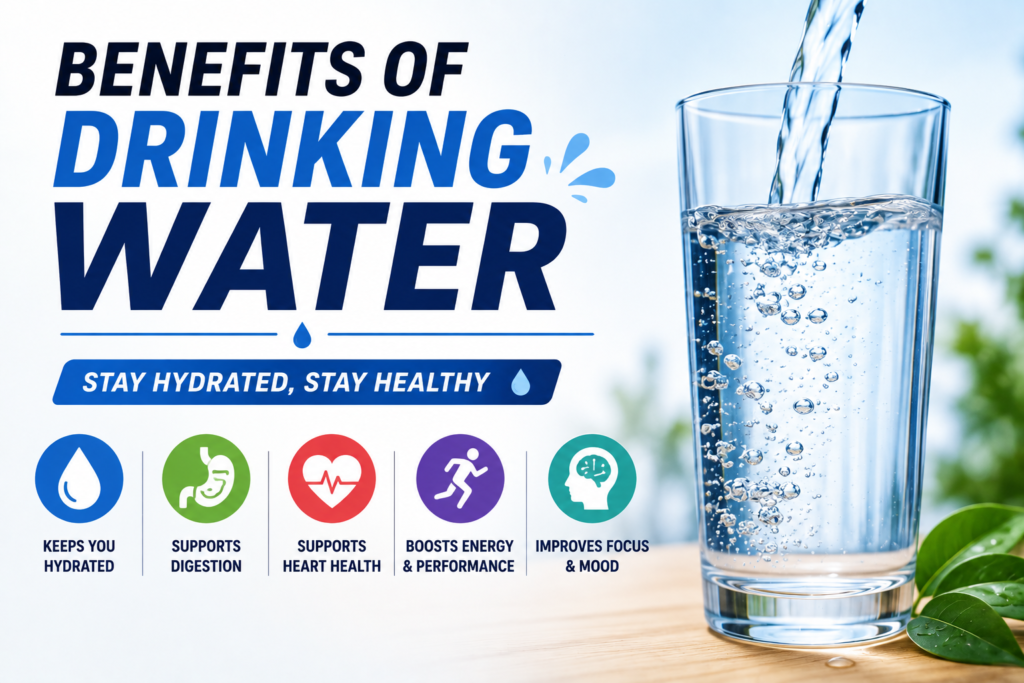
Benefits of Drinking Water: Why Hydration Is Important for Your Health
Water is essential for life. The human body depends on water for many important functions, including regulating temperature, transporting nutrients, supporting digestion and maintaining normal physical performance.
Because the body continually loses water through breathing, sweating and urination, fluids need to be replaced regularly.
The Benefits of Drinking Water make proper hydration an important part of a healthy lifestyle.
Why Does the Body Need Water?
Water is found throughout the body and plays a role in many biological processes.
It helps regulate body temperature, lubricate joints, protect sensitive tissues and transport substances throughout the body.
When the body loses more fluid than it takes in, dehydration can occur. Mild dehydration may cause symptoms such as thirst, tiredness, headache or reduced physical performance.
Benefits of Drinking Water for Physical Performance
Proper hydration is particularly important during physical activity.
When people exercise or work in hot conditions, they can lose more fluid through sweating. Replacing those fluids helps the body maintain normal temperature and supports physical performance.
Dehydration can make physical activity feel more difficult and may reduce endurance.
For this reason, drinking appropriate amounts of fluids before, during and after demanding physical activity can be important.
Water and Digestion
Water also supports normal digestion.
Adequate fluid intake, together with sufficient dietary fiber, can help maintain normal bowel function.
Drinking water throughout the day can therefore be part of a healthy routine that supports digestive health.
Water and Body Temperature
One of the body’s important functions is maintaining a stable internal temperature.
Sweating is one of the ways the body cools itself. When someone loses significant amounts of fluid through sweating, replacing those fluids becomes particularly important.
This is especially relevant during hot weather or intense physical activity.
Hydration and Energy
Dehydration can contribute to tiredness and reduced concentration.
Maintaining adequate hydration can help support normal physical and cognitive function, particularly when the body is losing fluids through heat or exercise.
However, tiredness can have many different causes, so drinking more water is not a solution for every type of fatigue.
How Much Water Should You Drink?
There is no single amount of water that is perfect for every person.
Fluid needs can vary depending on factors such as age, body size, physical activity, weather, diet and overall health.
People may also obtain fluids from foods and beverages in addition to plain water.
Instead of focusing only on a fixed number, paying attention to thirst and maintaining regular fluid intake can be useful for many healthy adults.
Signs You May Need More Fluids
Thirst is one of the body’s signals that fluid intake may be needed.
Other possible signs of dehydration can include:
Darker urine
Dry mouth
Tiredness
Headache
Dizziness
Reduced physical performance
Severe dehydration can be dangerous and requires appropriate medical attention.
Water During Exercise
Exercise can increase fluid loss, particularly during prolonged activity or in hot and humid conditions.
People exercising for extended periods may need to pay additional attention to fluid and electrolyte replacement.
For ordinary daily activity, plain water is often a practical beverage choice.
For longer or more intense exercise, individual hydration needs can be different.
Choosing Water Instead of Sugary Drinks
Another potential advantage of drinking water is that plain water contains no added sugar or calories.
Replacing sugary beverages with water can be one simple way to reduce overall sugar intake.
This does not mean every other beverage needs to be eliminated, but choosing water more often can support a healthier dietary pattern.
Hydration and a Healthy Lifestyle
The Benefits of Drinking Water are most useful when hydration is combined with other healthy habits.
A balanced diet, regular physical activity, adequate sleep and appropriate medical care all contribute to overall health.
Water is an essential part of this picture, but it should not be viewed as a cure for diseases or a replacement for medical treatment.
Simple Ways to Drink More Water
If you often forget to drink water, a few simple habits may help:
Keep a water bottle nearby.
Drink water with meals.
Drink when you feel thirsty.
Carry water when exercising or traveling.
Choose water instead of sugary drinks more often.
Eat water-rich foods such as fruits and vegetables.
Building a consistent routine can make hydration easier.
Final Thoughts
The Benefits of Drinking Water are closely connected to the body’s basic functions.
Water helps regulate temperature, supports physical activity, contributes to normal digestion and helps maintain the body’s fluid balance.
Individual fluid needs vary, so there is no universal amount that everyone must drink each day.
The goal is to maintain healthy hydration according to your body’s needs, activity level and environment.
Making water a regular part of your daily routine is a simple step toward supporting overall health and well-being.