
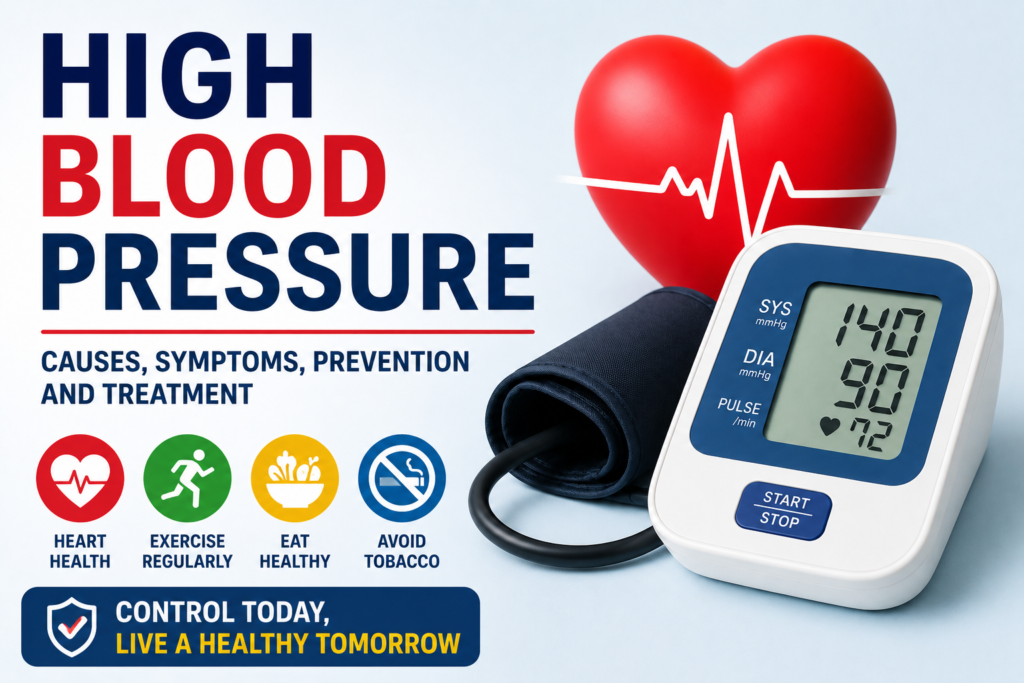
High Blood Pressure: Causes, Symptoms, Prevention and Treatment
High blood pressure, also known as hypertension, is one of the most common health conditions worldwide. It occurs when the pressure of blood against the walls of the arteries remains consistently elevated.
The condition is particularly important because many people with high blood pressure do not experience noticeable symptoms. Regular blood pressure measurement is therefore an important way to detect the problem early.
What Is High Blood Pressure?
Blood pressure is measured using two numbers.
The first number is systolic blood pressure, which represents pressure when the heart contracts. The second is diastolic blood pressure, which represents pressure when the heart relaxes between beats.
According to WHO guidance, hypertension is diagnosed when blood pressure readings are 140/90 mmHg or higher on measurements taken on two different days.
Why Is High Blood Pressure Dangerous?
The biggest concern with High Blood Pressure is that it can damage blood vessels and organs over time.
Uncontrolled hypertension can increase the risk of heart disease, heart attack, stroke and kidney disease.
Because it often develops without obvious symptoms, people may have elevated blood pressure without realizing it.
Common Risk Factors
Several factors can increase the likelihood of developing hypertension.
These include:
- Eating too much salt
- Physical inactivity
- Being overweight or obese
- Tobacco use
- Excessive alcohol consumption
- Increasing age
- Family history
- Certain medical conditions
Some risk factors cannot be changed, such as age and genetics, while others can be addressed through lifestyle changes.
Symptoms of High Blood Pressure
One of the most important facts about High Blood Pressure is that it often causes no noticeable symptoms.
Some people may experience headaches, vision changes or other symptoms, but symptoms are not a reliable way to determine whether someone has hypertension.
The most dependable way to know your blood pressure is to have it measured.
Reduce Salt in Your Diet
Eating too much salt can contribute to elevated blood pressure.
WHO recommends limiting salt intake and encourages people to eat more fruits and vegetables as part of a healthier diet.
Reducing heavily salted and highly processed foods can be one practical step toward a healthier eating pattern.
Stay Physically Active
Regular physical activity can help support cardiovascular health and reduce hypertension risk.
Walking, cycling, swimming, running and other forms of exercise can help people become more active.
WHO recommends that adults generally get at least 150 minutes of moderate-intensity aerobic activity per week, along with muscle-strengthening activities on two or more days per week.
Maintain a Healthy Weight
Being overweight or obese can increase the risk of hypertension.
For people who are overweight, gradual weight loss through a balanced diet and regular physical activity may help improve blood pressure.
A healthy approach should focus on sustainable lifestyle changes rather than extreme diets.
Avoid Tobacco
Tobacco use can damage blood vessels and increase cardiovascular risk.
Quitting tobacco is therefore an important step for people who want to protect their heart and blood vessels.
Avoiding exposure to tobacco smoke can also contribute to better overall cardiovascular health.
Limit Alcohol
Excessive alcohol consumption can contribute to high blood pressure.
Reducing alcohol intake can therefore be part of a broader strategy for improving cardiovascular health.
People who are concerned about their alcohol use can speak with a healthcare professional for appropriate guidance.
Manage Stress
Long-term stress can make it more difficult to maintain healthy habits.
Regular physical activity, adequate sleep, relaxation techniques and social support can all be useful components of a healthy lifestyle.
Stress management should be considered part of an overall approach rather than a replacement for medical treatment.
Check Your Blood Pressure Regularly
Regular measurement is one of the simplest ways to detect hypertension.
A blood pressure check is quick and painless, and measurements can be taken at healthcare facilities or, when appropriate, with validated home devices.
Knowing your numbers allows you and your healthcare professional to identify potential problems and decide whether further evaluation is needed.
Can High Blood Pressure Be Treated?
Yes. Hypertension can often be controlled through a combination of lifestyle changes and, when needed, medication.
Some people can improve their blood pressure through lifestyle changes, while others require prescribed medicines.
If medication is prescribed, it is important to take it exactly as directed and continue regular follow-up with a healthcare professional.
Never stop or change blood-pressure medication without discussing it with your doctor.
How to Protect Your Heart and Blood Vessels
A healthy lifestyle can help reduce cardiovascular risk.
Simple habits include:
- Eating more fruits and vegetables
- Reducing salt
- Staying physically active
- Avoiding tobacco
- Limiting excessive alcohol
- Maintaining a healthy weight
- Checking blood pressure regularly
- Following prescribed treatment
These habits can also support overall health beyond blood pressure management.
Final Thoughts
High Blood Pressure is a serious but manageable health condition.
Because it often has no obvious symptoms, regular blood pressure checks are extremely important. Early detection gives people an opportunity to make appropriate lifestyle changes and seek medical treatment when necessary.
A balanced diet, regular exercise, reduced salt intake, avoiding tobacco and following medical advice can all contribute to better blood-pressure control.
If you are concerned about your blood pressure or receive an unusually high reading, speak with a qualified healthcare professional rather than trying to diagnose or treat yourself.
Understanding High Blood Pressure and checking it regularly can be an important step toward protecting long-term heart, brain and kidney health.