
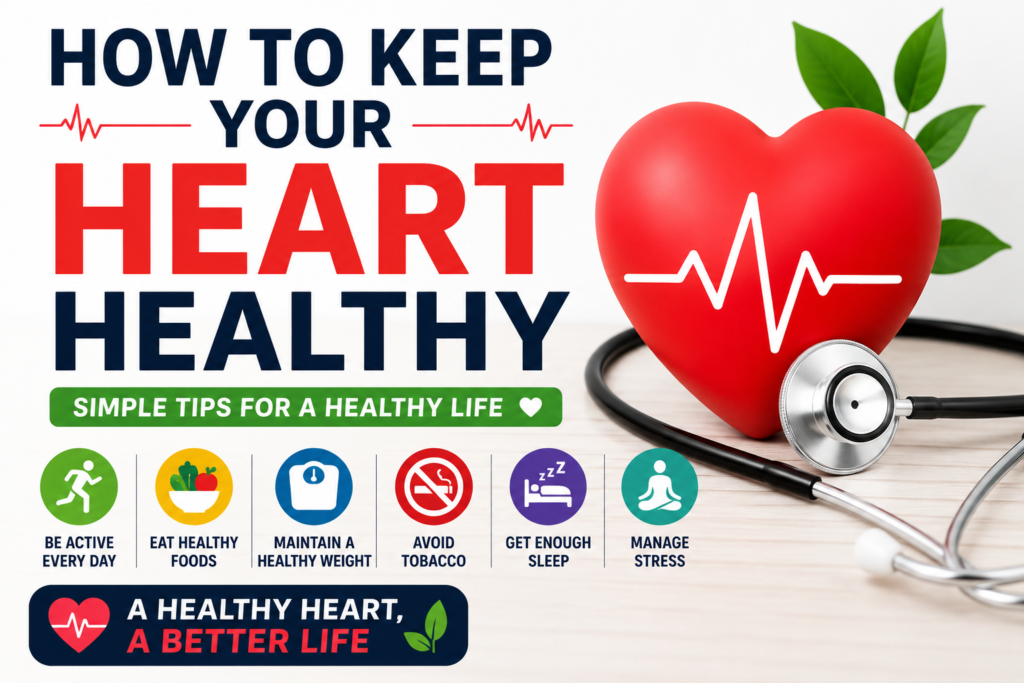
How to Keep Your Heart Healthy: Simple Heart Health Tips
The heart is one of the body’s most important organs. It continuously pumps blood throughout the body, delivering oxygen and nutrients to tissues and helping remove waste products.
Taking care of cardiovascular health is an important part of maintaining overall well-being. Everyday habits such as physical activity, nutritious food, adequate sleep and avoiding tobacco can all contribute to a healthier lifestyle.
Building a Healthy Heart is not about making one major change. It is about developing habits that can be maintained over the long term.
Why Is Heart Health Important?
Heart and blood-vessel diseases are among the major causes of death worldwide. Many cardiovascular risk factors are influenced by lifestyle and can be addressed through prevention and appropriate medical care.
Blood pressure, cholesterol, smoking, physical inactivity, diet and other factors can all affect cardiovascular health.
This is why maintaining a Healthy Heart should be part of an overall healthy lifestyle.
Exercise Regularly
Regular physical activity is one of the most important habits for cardiovascular health.
Walking, cycling, swimming, jogging and other aerobic activities can help improve fitness and support heart health.
Adults are generally encouraged to get regular moderate or vigorous physical activity throughout the week, according to public-health guidelines.
You do not necessarily need an intense workout every day. Consistent movement can be a practical starting point.
Eat a Balanced Diet
Food choices can also influence cardiovascular health.
A heart-friendly eating pattern can include:
- Fruits and vegetables
- Whole grains
- Beans and lentils
- Nuts and seeds
- Fish and other healthy protein sources
- Appropriate amounts of healthy fats
It can also be helpful to limit excessive amounts of sodium, added sugars and unhealthy fats.
A balanced diet does not require completely eliminating foods you enjoy. The overall eating pattern matters.
Maintain a Healthy Weight
Maintaining a healthy weight can be beneficial for cardiovascular health.
Excess body weight can increase the risk of conditions such as high blood pressure and type 2 diabetes, which are associated with cardiovascular disease.
Regular physical activity and balanced nutrition can support healthy weight management.
Keep Blood Pressure Under Control
High blood pressure can place additional strain on the cardiovascular system.
One challenge is that high blood pressure often does not cause obvious symptoms, which is why regular blood-pressure checks can be important.
If a healthcare professional identifies high blood pressure, following their recommendations and taking prescribed medication when appropriate can help manage the condition.
Pay Attention to Cholesterol
Cholesterol is a substance the body needs, but abnormal cholesterol levels can contribute to the buildup of plaque in arteries.
A healthy diet, physical activity and other lifestyle choices can influence cholesterol levels.
Some people may also require medication depending on their individual cardiovascular risk.
Regular medical checkups can help identify problems that may otherwise go unnoticed.
Avoid Tobacco
Avoiding tobacco is one of the most important things a person can do for cardiovascular health.
Smoking damages blood vessels and increases the risk of heart disease and stroke.
People who smoke can benefit from quitting, and healthcare professionals can provide support and evidence-based treatments to help with smoking cessation.
Get Enough Sleep
Sleep is another part of cardiovascular health.
Adults generally need around seven to nine hours of sleep each night, although individual needs can vary.
Consistently poor sleep has been associated with several health problems, including cardiovascular risk factors.
Maintaining a regular sleep schedule and creating a comfortable sleeping environment can support better sleep.
Manage Stress
Stress is a normal part of life, but ongoing stress can make healthy habits more difficult.
Regular exercise, relaxation techniques, social connections, hobbies and adequate sleep can help people manage everyday stress.
Managing stress is not about eliminating every difficult situation. It is about developing healthy ways to respond to challenges.
Limit Alcohol
Alcohol consumption can affect health, and excessive drinking can increase cardiovascular and other health risks.
People who drink should follow applicable health guidance and avoid excessive consumption.
Anyone concerned about their alcohol use can speak with a healthcare professional for support.
Regular Health Checkups
Some cardiovascular risk factors may not cause noticeable symptoms.
Regular health checks can help monitor things such as:
- Blood pressure
- Cholesterol
- Blood glucose
- Body weight
Your doctor can determine which tests and screening schedules are appropriate based on your age, medical history and risk factors.
Small Habits Can Make a Difference
You do not have to change your entire lifestyle overnight.
Simple habits can include:
- Taking a daily walk
- Eating more vegetables
- Choosing whole grains
- Reducing highly processed foods
- Getting consistent sleep
- Avoiding tobacco
- Managing stress
- Keeping medical appointments
Over time, these small decisions can become part of a sustainable routine.
Final Thoughts
Maintaining a Healthy Heart is a lifelong process.
Regular physical activity, balanced nutrition, healthy sleep, stress management, avoiding tobacco and monitoring important health measurements can all contribute to cardiovascular health.
There is no single habit that guarantees protection from heart disease. Genetics, age, existing health conditions and many other factors also play a role.
The best approach is to build sustainable healthy habits and work with a healthcare professional when individual medical advice is needed.
A Healthy Heart starts with everyday choices, and even small improvements can be valuable steps toward better overall health.