
AI Search Monitoring: How to Track Your Brand in AI Search Results (2026 Guide)
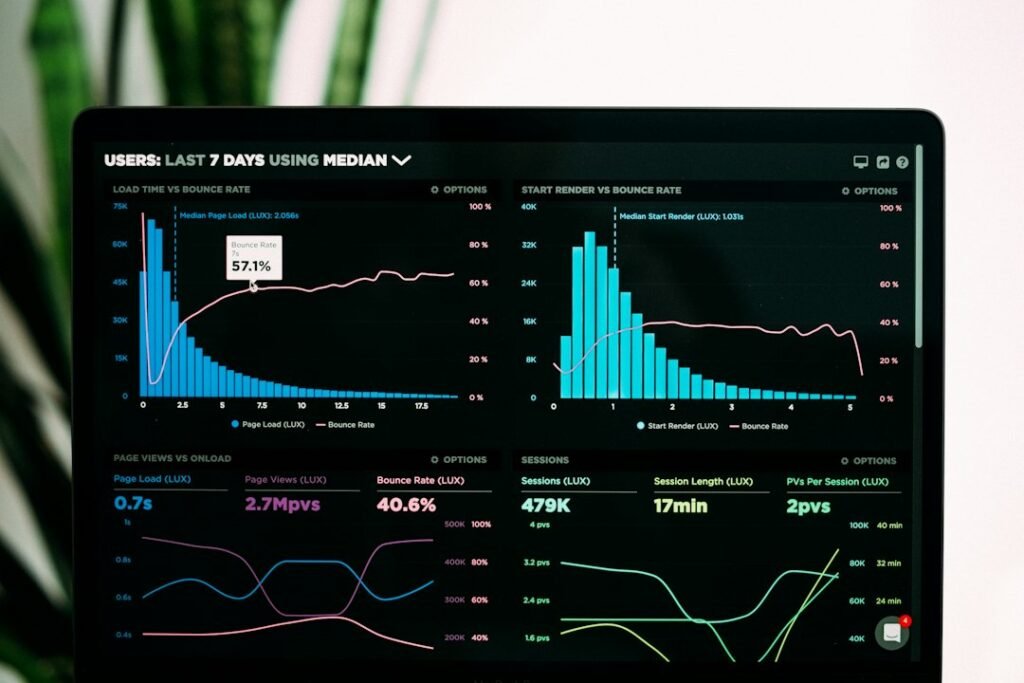
Photo by <a href="https://unsplash.com/@lukechesser?utm_source=WP+Agent&utm_medium=referral">Luke Chesser</a> on <a href="https://unsplash.com/?utm_source=WP+Agent&utm_medium=referral">Unsplash</a>
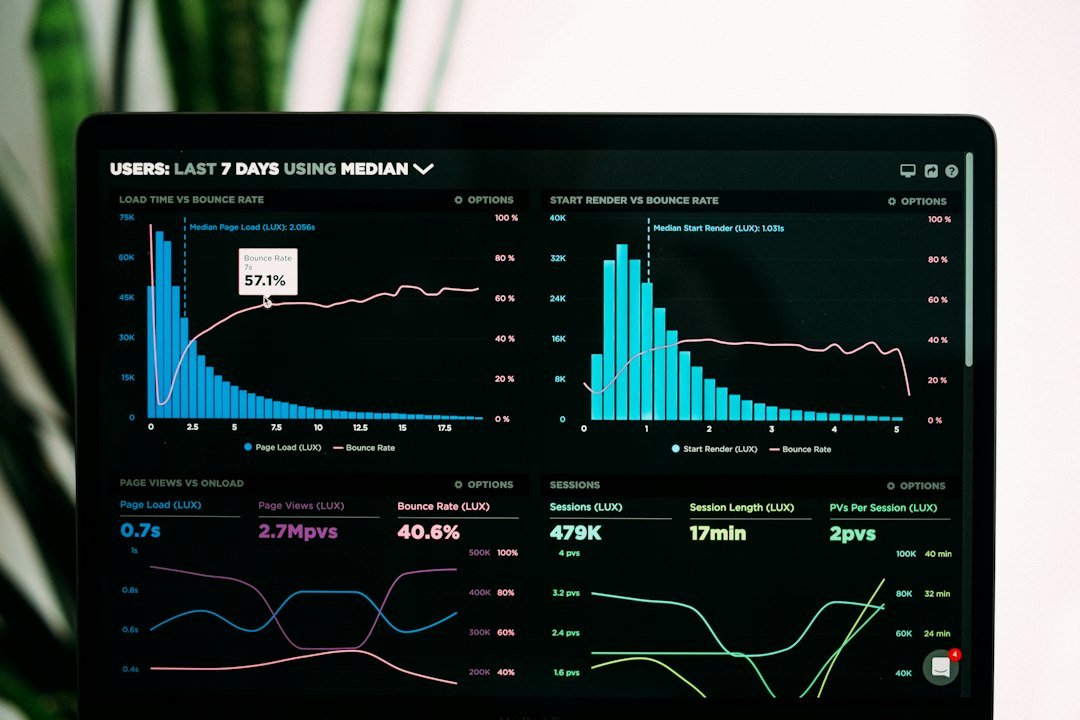
AI Search Monitoring: How to Track Your Brand in AI Search Results (2026 Guide)
Search is changing faster than ever. For years, businesses focused on ranking their websites on traditional search engines — keywords, backlinks, technical SEO, and content optimization were the foundation of online visibility.
Today, there’s another question marketers need to ask: what does AI say about my brand when customers ask about products or services in my industry?
A website can rank #1 on Google and still be completely invisible inside AI-generated answers. That gap is what AI search monitoring exists to measure.
What Is AI Search Monitoring?
AI search monitoring is the process of tracking your brand’s presence across AI-powered search and answer platforms — ChatGPT, Google AI Overviews, Perplexity, and similar tools. These platforms handle search and sources differently; our guide to how Perplexity and ChatGPT differ explains why.
Instead of only checking keyword rankings, you monitor conversational questions such as:
- What are the best tools for digital marketing?
- Which software is best for small businesses?
- Which companies offer the best AI search monitoring software?
- What is the best project management software for small businesses?
The goal is to discover which brands appear in AI-generated answers and why — and use that information to improve your content strategy and online authority.
Why AI Visibility Matters
A traditional search result gives users a list of websites to click through. AI-powered search can instead give a direct answer containing a short list of recommendations, summaries, and references — and if the user is satisfied with that answer, they may never click through to a traditional search result at all.
Imagine a potential customer asks an AI platform:
“What are the best AI marketing tools for a small business?”
If your competitor appears repeatedly while your company never gets mentioned, you’re missing a source of potential customers that traditional rank tracking would never show you. AI search monitoring is what makes this visibility gap measurable.
What Can AI Search Monitoring Track?
Brand Mentions
How frequently your company appears in AI-generated answers.
Competitor Visibility
Which businesses are being recommended for the same questions — and how often, compared to you.
Citations
Which websites and pages AI systems reference when answering questions in your industry.
Prompt Visibility
Which specific customer questions trigger a mention of your brand.
Sentiment and Position
Being mentioned isn’t the same as being recommended. Your brand might appear but not be the one actually suggested, get listed after a competitor, or be described less favorably than a rival. A useful monitoring practice looks at mention frequency, position, sentiment, and recommendation strength — not just whether your name shows up at all.
Visibility Trends
Historical data showing whether your AI presence is increasing or declining over time.
It’s also worth remembering that AI systems learn about brands from many sources beyond your own website — news coverage, industry publications, reviews, forums, research papers, social platforms, and business directories can all shape how (and whether) an AI system describes you. Your broader web reputation matters, not just your own site’s content.
AI Search Monitoring vs Traditional SEO
| Traditional SEO Tracking | AI Search Monitoring |
|---|---|
| Keyword rankings | AI brand mentions |
| Organic traffic & clicks | Citations & referenced sources |
| Search impressions | AI recommendations |
| Backlinks | Competitor visibility in AI answers |
| Technical SEO | Prompt-level visibility |
| Search positions | AI sentiment & share of voice |
These aren’t competing strategies — a strong digital presence combines traditional SEO + high-quality content + AI visibility monitoring. A website can rank well in Google and still have weak AI visibility, or vice versa.
The Best AI Search Monitoring Tools in 2026
There isn’t one universal best tool — the right platform depends on your business size, budget, target AI engines, and the depth of reporting you need. Here’s a comparison of the leading options:
| Tool | Best For | Main Focus |
|---|---|---|
| Profound | Enterprise brands | Deep AI-visibility analytics, prompts, citations, competitors |
| Otterly.AI | Small businesses, agencies | Accessible dedicated AI-visibility tracking |
| Peec AI | Marketing teams, GEO specialists | Visibility, sentiment, and citation tracking |
| Ahrefs Brand Radar | Existing Ahrefs users | AI visibility combined with traditional SEO research |
| Semrush AI Visibility Toolkit | SEO agencies & content teams | AI visibility alongside traditional SEO workflows |
| Scrunch AI | AI-agent-focused brands | How websites are discovered and represented by AI |
| SE Ranking | Smaller SEO teams | Traditional + AI visibility in one workflow |
| Rankscale | Ongoing prompt tracking | Automated prompt monitoring over time |
| AthenaHQ | GEO strategy teams | Advanced Generative Engine Optimization |
| Goodie AI | Brand monitoring | AI-generated answer context and opportunities |
| LLMrefs | Multi-platform tracking | Visibility across multiple LLM-based search tools |
| Promptwatch | Prompt-driven brands | Tracking brand presence across generated answers |
| SearchScore | Smaller businesses | Accessible AI-visibility scoring before scaling up |
| Conductor | Enterprise content teams | Enterprise SEO combined with AI-search intelligence |
| HubSpot | Inbound marketing teams | Connecting AI visibility with content & lead gen |
| Nightwatch / BrightEdge | Traditional rank tracking | Complementary organic-search data |
| Google Search Console | Everyone (free) | Traditional search performance — not AI-specific, but essential context |
Profound
One of the major dedicated AI-search visibility platforms, focused on helping larger companies understand how AI answer engines represent their brand across prompts, mentions, citations, and competitors.
Otterly.AI
A dedicated AI-visibility monitoring platform aimed at marketers, agencies, and smaller businesses that want to track prompts and compare visibility against competitors without buying a full enterprise SEO suite.
Peec AI
Focused heavily on AI visibility and Generative Engine Optimization — brand mentions, sentiment, competitors, and citations, with an emphasis on tracking how visibility changes over time.
Ahrefs Brand Radar & Semrush AI Visibility Toolkit
Both established SEO platforms have extended into AI visibility. Ahrefs describes its AI-visibility data as modeled from hundreds of millions of search-backed prompts across multiple AI platforms; Semrush’s AI features track selected prompts across AI platforms and Google’s AI experiences. Both are useful if you’re already using either ecosystem and want AI-search data alongside your existing SEO workflow — and both currently offer some free AI-visibility checking, with deeper monitoring behind a paid plan.
Google Search Console
Not a dedicated AI-search monitoring platform, but still one of the most important free tools available — it tracks search queries, impressions, clicks, and indexing for traditional Google Search. AI search hasn’t replaced traditional SEO, so this remains a core part of the picture.
The other platforms in the table above — Scrunch AI, SE Ranking, Rankscale, AthenaHQ, Goodie AI, LLMrefs, Promptwatch, SearchScore, Conductor, and HubSpot — serve more specific monitoring, GEO, or workflow needs. Current 2026 comparisons consistently place several of these among the leading options, though features and pricing are changing quickly in this young category.
Free vs Paid AI Search Monitoring
You don’t need to buy software on day one.
Free / Manual Approach
Create a spreadsheet with 20–30 important questions your customers might ask. For each one, record:
| Metric | What to Record |
|---|---|
| Your brand | Mentioned or not |
| Competitors | Which brands appear |
| Citation | Which sources are referenced |
| Position | Where your brand appears |
| Sentiment | Positive, neutral, negative |
| Date | When you checked |
This is suitable for bloggers, new websites, small businesses, and early GEO experiments — and it’s exactly how to start before paying for anything.
Paid Approach
Paid monitoring becomes worthwhile once you need many prompts tracked automatically, historical data, competitor comparisons, multiple markets, team collaboration, or detailed citation analysis. Start small and upgrade once the data becomes valuable enough to justify the cost.
A Simple 7-Step AI Search Monitoring Strategy
- Find important questions — identify 20–50 questions your customers might ask.
- Check AI platforms — test those questions across relevant AI search engines.
- Record your visibility — track mentions, citations, competitors, and sentiment.
- Identify gaps — find questions where competitors appear but you don’t.
- Research the winners — study the sources and content behind those answers.
- Improve your content — create genuinely useful pages that address the missing topics.
- Monitor again — repeat the process and measure changes.
This creates a simple cycle: Monitor → Analyze → Improve → Measure → Repeat.
How to Improve Your AI Search Visibility
Monitoring tells you what’s happening; it doesn’t fix anything by itself. Once you know where you’re missing, focus on:
- Clear, direct answers to real questions (not generic keyword-stuffed pages)
- Original research, statistics, and expert insight
- Well-organized, structured content — headings, lists, tables, FAQs
- Earning legitimate mentions and backlinks from trustworthy sources
- Keeping information updated as facts and products change
- Demonstrating who created the content and why they’re qualified to write it
The objective is to become a genuinely valuable source of information — not to try to manipulate AI-generated results.
Common Mistakes to Avoid
Tracking Only One Prompt
AI answers can vary significantly depending on exact phrasing — track a group of related questions, not just one.
Focusing Only on Mentions
A mention without useful context — or without an actual recommendation — isn’t necessarily valuable. Check sentiment and position too.
Ignoring Citations and Competitors
Understanding which sources influence AI answers — and why competitors are winning — provides some of the most useful content ideas you’ll find.
Publishing Mass Low-Quality AI Content
More pages don’t automatically mean more visibility — quality and genuine usefulness matter more than volume.
Ignoring Traditional SEO
Technical SEO, useful content, internal linking, and backlinks still matter — AI search hasn’t replaced them.
Expecting Instant Results
AI visibility changes over time, and different AI systems can produce different answers for the same question.
The Future of Search Is Becoming More Conversational
People are increasingly comfortable asking complete questions instead of typing short keywords. That means marketers need to think about questions, topics, entities, and intent — not just individual keywords.
AI search monitoring provides a way to observe this changing environment: what users are asking, which competitors are visible, which sources are being referenced, and where new content opportunities exist.
Conclusion
AI is creating a new layer of online visibility that businesses can’t afford to ignore. Traditional SEO remains important, but AI search monitoring provides additional insight into how brands actually appear in AI-powered search experiences.
From tracking brand mentions and competitors to monitoring citations, sentiment, and conversational prompts, the tools above can help you understand exactly where you stand in the rapidly evolving AI search landscape — and, more importantly, what to do about it.
The smartest strategy isn’t choosing the tool with the biggest feature list. It’s creating genuinely useful content and continuously monitoring how your brand is represented across the changing search ecosystem.






hello there and thank you for your info – I have certainly picked
up anything new from right here. I did however expertise several technical points using this site, since I experienced to
reload the web site lots of times previous to I could get it to load
properly. I had been wondering if your web host is OK?
Not that I am complaining, but sluggish loading instances times will
very frequently affect your placement in google and can damage your quality score if advertising and marketing with Adwords.
Anyway I am adding this RSS to my email and could look out for much more of your respective fascinating content.
Make sure you update this again very soon.
What a information of un-ambiguity and preserveness of
valuable know-how regarding unexpected emotions.
If you want to grow your knowledge simply keep
visiting this site and be updated with the latest information posted here.
This is my first time visit at here and i am really pleassant to read all
at alone place.
I’m really enjoying the design and layout of your website.
It’s a very easy on the eyes which makes it much more pleasant for me to come here and visit more often. Did you hire out a developer to
create your theme? Outstanding work!
Thank you, I have just been looking for information approximately this subject for a while and yours is the greatest I have came upon so far.
However, what in regards to the conclusion? Are you
sure in regards to the supply?
I used to be able to find good information from your content.