
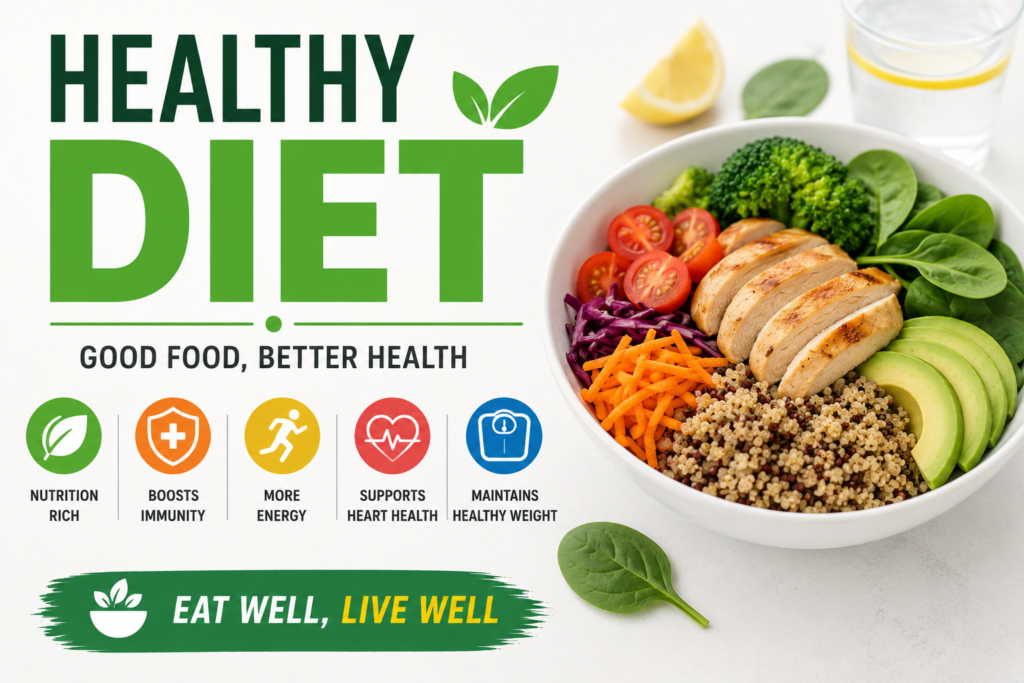
Healthy Diet: What to Eat for Better Health and Energy
Food plays an important role in maintaining good health. The body needs a variety of nutrients to produce energy, support growth, maintain organs and keep normal body functions working properly.
A healthy eating pattern does not require eliminating every food you enjoy. Instead, it is generally about eating a variety of nutritious foods in appropriate amounts and developing sustainable eating habits.
A Healthy Diet can provide the nutrients the body needs while supporting long-term health.
What Is a Healthy Diet?
A healthy diet is an eating pattern that includes a variety of nutritious foods.
This can include vegetables, fruits, whole grains, beans, nuts, seeds, healthy sources of protein and appropriate amounts of dairy or alternatives.
The exact diet can vary from person to person depending on age, lifestyle, culture, health needs and personal preferences.
Why Is Healthy Eating Important?
The body requires different nutrients to function properly.
Protein helps support muscles and other tissues. Carbohydrates provide an important source of energy, while fats play several roles in the body.
Vitamins and minerals are also essential for many biological processes.
Eating a wide variety of foods makes it easier to obtain different nutrients.
Fruits and Vegetables
Fruits and vegetables are important components of a healthy eating pattern.
They provide vitamins, minerals, fiber and other beneficial plant compounds.
Adding different colors and varieties to meals can make food more nutritious and enjoyable.
Simple choices include apples, bananas, oranges, carrots, spinach, tomatoes, cucumbers and many other seasonal fruits and vegetables.
Whole Grains
Whole grains contain more of the naturally occurring components of the grain than refined grains.
Foods such as oats, brown rice, whole-grain bread and whole-grain cereals can be included as part of a balanced eating pattern.
Whole grains can also provide dietary fiber, which supports normal digestive health.
Protein-Rich Foods
Protein is important for maintaining and repairing body tissues.
Good sources can include beans, lentils, eggs, fish, poultry, nuts, seeds and other protein-rich foods.
Choosing a variety of protein sources can make meals more balanced and provide different nutrients.
Healthy Fats
Not all fats are the same.
Foods such as nuts, seeds, avocados, olives and certain fish contain fats that can fit into a healthy eating pattern.
It is generally useful to limit excessive intake of foods high in saturated and trans fats while choosing healthier sources more often.
Limit Excess Sugar and Salt
A balanced eating pattern also involves paying attention to foods and drinks that contain high amounts of added sugar or salt.
Sugary drinks, sweets and highly processed foods can contribute significant amounts of added sugar or calories.
Eating these foods occasionally is different from making them the main part of your everyday diet.
Drink Enough Fluids
Hydration is another important part of a healthy lifestyle.
Water is an essential nutrient and can be a simple everyday beverage choice.
Fluid requirements vary depending on factors such as physical activity, weather and individual health.
Healthy Diet and Energy
A balanced diet can help provide the energy needed for daily activities.
Meals containing a combination of carbohydrates, protein, healthy fats and nutrient-rich foods can help create a more balanced eating pattern.
Skipping meals or relying heavily on highly processed foods may make it harder for some people to maintain consistent energy throughout the day.
Healthy Diet and Heart Health
Diet is one factor that can influence cardiovascular health.
Eating more fruits, vegetables, whole grains, legumes and other nutrient-rich foods while limiting excessive amounts of saturated fat, added sugar and sodium can be part of a heart-healthy eating pattern.
However, diet is only one part of cardiovascular health. Physical activity, sleep, smoking status and other factors also matter.
Building Healthy Eating Habits
Changing your diet does not have to happen overnight.
Small changes can be easier to maintain.
You can start by:
- Adding more vegetables to meals
- Choosing whole grains more often
- Eating a variety of fruits
- Including healthy protein sources
- Drinking more water
- Reducing sugary drinks
- Paying attention to portion sizes
- Cooking more meals at home
Over time, these habits can become part of your normal routine.
Is a Healthy Diet the Same for Everyone?
No. Nutritional needs can differ between individuals.
Age, activity level, allergies, medical conditions, pregnancy and other factors can affect dietary requirements.
Someone with a specific medical condition may need a personalized eating plan from a qualified healthcare professional or registered dietitian.
Final Thoughts
A Healthy Diet is not about following a perfect menu every day.
It is about creating a balanced eating pattern that provides a variety of nutrients and can be maintained over the long term.
Fruits, vegetables, whole grains, protein-rich foods, healthy fats and adequate fluids can all have a place in a nutritious lifestyle.
By making small and sustainable improvements to everyday food choices, people can build healthier eating habits without completely giving up the foods they enjoy.
A Healthy Diet, combined with regular physical activity, adequate sleep and other healthy habits, can be an important foundation for overall well-being.