
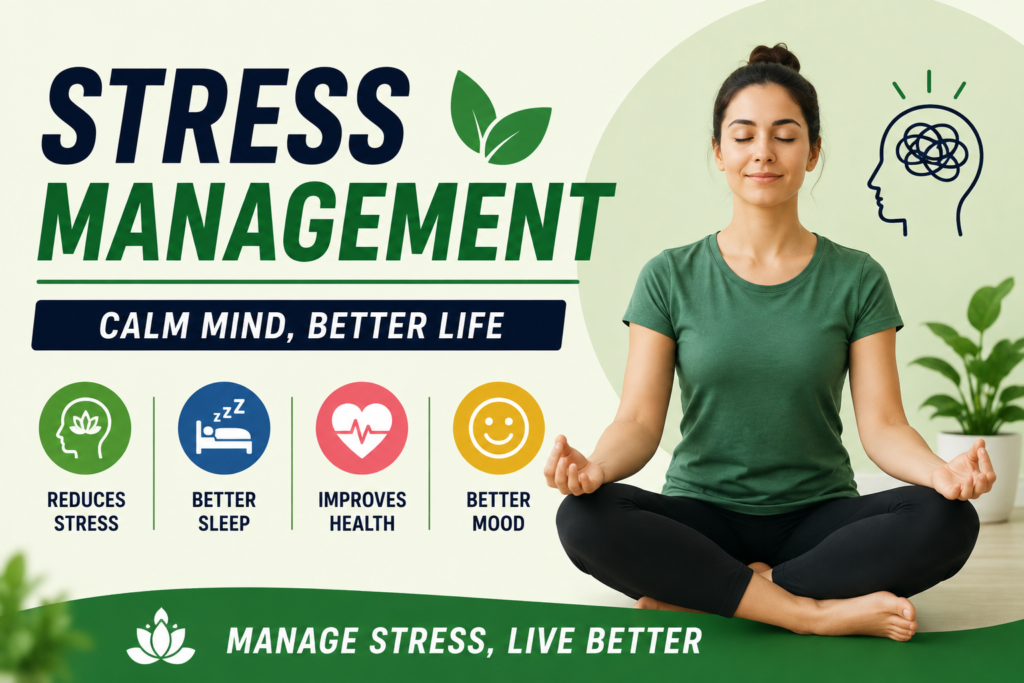
Stress Management: Simple Ways to Reduce Stress and Improve Your Health
Stress is a normal part of everyday life. Work, financial responsibilities, family situations, deadlines and unexpected problems can all create stress.
A small amount of stress can sometimes help people stay focused and respond to challenges. However, ongoing or overwhelming stress can affect physical and emotional well-being.
Learning Stress Management techniques can help people develop healthier ways to respond to everyday challenges.
What Is Stress?
Stress is the body’s response to challenging or demanding situations.
When a person feels threatened or under pressure, the body can release hormones that increase alertness and prepare the body to respond.
This response can be useful in certain situations. The problem can arise when stress becomes frequent, intense or difficult to manage.
Why Is Stress Management Important?
Long-term stress can affect different areas of health and daily life.
People experiencing significant stress may have difficulty sleeping, concentrating or relaxing. They may also feel irritable, overwhelmed or constantly worried.
Effective Stress Management does not mean eliminating every stressful situation. Instead, it involves developing healthy strategies for dealing with stress and recognizing when additional support may be needed.
Exercise and Stress
Physical activity can be a useful part of a stress-management routine.
Walking, cycling, swimming, stretching or other forms of exercise can provide an opportunity to move the body and take a break from stressful activities.
You do not necessarily need an intense workout. Even regular moderate physical activity can be a practical way to build a healthier daily routine.
Get Enough Sleep
Sleep and stress are closely connected.
When people are stressed, they may find it harder to relax and sleep well. At the same time, not getting enough sleep can make it more difficult to handle daily challenges.
Maintaining a consistent sleep schedule, creating a relaxing bedtime routine and reducing stimulating activities before bed may help support better sleep.
Practice Relaxation Techniques
Relaxation techniques can help some people calm their minds and bodies.
Examples include:
- Deep breathing
- Meditation
- Gentle stretching
- Progressive muscle relaxation
- Spending quiet time outdoors
- Listening to calming music
Different techniques work differently for different people, so it can be useful to experiment and find something that fits your routine.
Maintain Social Connections
Talking to trusted friends, family members or other supportive people can make difficult situations easier to handle.
Social connection can provide emotional support and help people gain a different perspective on problems.
You do not always need to discuss every problem in detail. Sometimes simply spending time with people you trust can help reduce feelings of isolation.
Organize Your Daily Tasks
A long list of responsibilities can make stress feel worse.
Breaking large tasks into smaller steps can make them feel more manageable.
You can create a simple daily list and focus on the most important tasks first.
Avoiding unnecessary multitasking may also help you concentrate on one task at a time.
Take Breaks
Working continuously without breaks can contribute to mental exhaustion.
Short breaks throughout the day can give your mind an opportunity to reset.
A few minutes of walking, stretching, breathing exercises or simply stepping away from a screen can be useful.
Eat a Balanced Diet
Healthy eating is another part of overall well-being.
A balanced diet containing vegetables, fruits, whole grains, protein-rich foods and other nutritious foods can support general health.
Stress can sometimes lead people to rely more heavily on highly processed foods, sugary drinks or excessive caffeine. Paying attention to eating habits can therefore be helpful when trying to build a healthier routine.
Limit Unhealthy Coping Habits
People respond to stress in different ways.
Some may turn to smoking, excessive alcohol, overeating or other unhealthy behaviors as a way of coping.
Although these behaviors may provide temporary relief, they can create additional problems over time.
Developing healthier coping strategies is a more sustainable approach to Stress Management.
Spend Time Doing Things You Enjoy
Hobbies and enjoyable activities can provide a healthy break from responsibilities.
Reading, gardening, watching a movie, playing sports, cooking, photography or spending time outdoors can all provide opportunities to relax.
Making time for enjoyable activities is not necessarily wasted time. Rest and recreation can be important parts of maintaining balance.
When Should You Seek Professional Help?
Sometimes stress becomes difficult to manage without professional support.
If stress is seriously affecting sleep, work, relationships or everyday functioning, speaking with a qualified healthcare or mental-health professional may be appropriate.
Persistent feelings of anxiety, hopelessness or emotional distress should not simply be ignored.
Professional support can help identify the underlying causes and develop appropriate coping strategies.
Building a Stress-Management Routine
Effective Stress Management does not have to involve complicated techniques.
A simple routine might include:
- A short daily walk
- Consistent sleep
- Healthy meals
- Regular breaks
- Time with supportive people
- Relaxation exercises
- Limiting unhealthy coping habits
- Making time for hobbies
Small changes can become easier to maintain when they are incorporated into everyday life.
Final Thoughts
Stress Management is an important part of maintaining overall well-being.
Stress cannot always be avoided, but people can develop healthier ways to respond to challenging situations.
Regular physical activity, adequate sleep, healthy eating, social support, relaxation and good time management can all contribute to a more balanced lifestyle.
If stress becomes overwhelming or starts interfering significantly with everyday life, professional help can be an important next step.
The goal of Stress Management is not to create a completely stress-free life. It is to develop healthy habits that make life’s challenges easier to handle.