
Physical AI: The Next Big Revolution After Generative AI
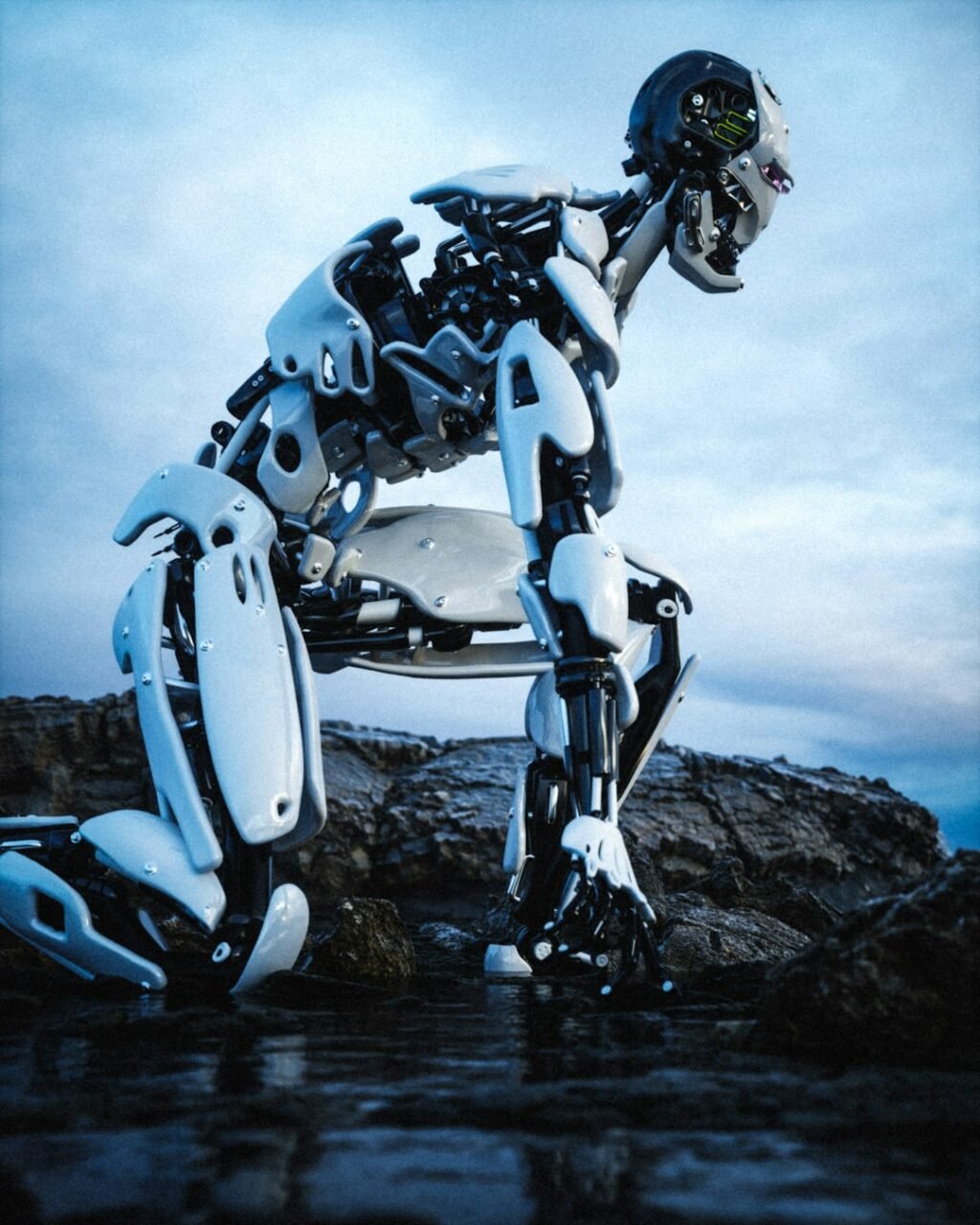
Photo by <a href="https://unsplash.com/@cashmacanaya?utm_source=WP+Agent&utm_medium=referral">Cash Macanaya</a> on <a href="https://unsplash.com/?utm_source=WP+Agent&utm_medium=referral">Unsplash</a>
Physical AI: The Next Big Revolution After Generative AI
Artificial intelligence has already transformed the digital world. Generative AI changed how people create content, write software, analyze information, and interact with computers. Now, the next major shift is moving AI out of screens and into the physical world.
This emerging technology is known as Physical AI—AI that enables robots, autonomous vehicles, machines, and other systems to perceive their surroundings, understand what is happening, make decisions, and physically act on those decisions.
In 2026, Physical AI is rapidly becoming one of the most important developments in robotics and automation. NVIDIA describes it as technology that allows autonomous systems such as robots, cameras, and self-driving vehicles to perceive, reason, and act in the real world.
What Is Physical AI?
Traditional AI primarily operates in the digital world. It can analyze text, generate images, write code, answer questions, and process enormous amounts of data.
Physical AI takes this intelligence one step further.
Instead of simply producing an answer, an intelligent machine can:
- See its environment
- Understand objects and surroundings
- Interpret human instructions
- Plan physical actions
- Move through complex environments
- Manipulate objects
- Learn from experience
- React to unexpected situations
For example, a traditional AI system might tell a warehouse worker where an item is located. A physical AI robot could locate the item, navigate to it, pick it up, and deliver it to another location.
That difference could fundamentally change how physical work is performed.
Why Physical AI Is the Next Big AI Revolution
Generative AI became powerful because models learned from enormous amounts of digital information.
But the physical world is much more complicated.
A robot operating in a factory or home has to understand gravity, friction, movement, distance, obstacles, lighting, objects, people, and countless unpredictable situations.
Modern robotics research is increasingly combining AI foundation models, simulation, synthetic data, and advanced sensors to address these challenges. NVIDIA says its latest robotics technologies are designed to help machines perceive, reason, and act in complex environments.
This represents a major transition:
Generative AI creates. Physical AI acts.
1. Humanoid Robots
Humanoid robots are among the most visible examples of this new technology.
Unlike traditional industrial robots designed for one specific task, humanoid robots are being developed to operate in environments originally designed for humans.
They could eventually assist with:
Factory operations, warehousing, logistics, maintenance, healthcare support, construction, household tasks, and dangerous physical work.
In 2026, robotics companies and technology providers are increasingly working on foundation models that allow robots to perform multiple tasks rather than relying entirely on rigid programming. NVIDIA’s robotics ecosystem includes humanoid developers and industrial robotics companies working toward this broader capability.
2. Smarter Factories
Manufacturing could be one of the biggest beneficiaries of Physical AI.
Traditional factory robots are highly effective but often designed for predictable environments.
AI-powered robots can potentially adapt when objects move, conditions change, or unexpected situations occur.
For example, an intelligent robot could recognize that a box is damaged and change how it handles the package rather than following the same instructions every time.
This type of adaptive behavior is already being explored in AI-driven palletizing and industrial robotics.
3. Autonomous Vehicles
Self-driving vehicles are another major application.
An autonomous vehicle needs to understand roads, pedestrians, traffic signals, other vehicles, weather conditions, and countless unpredictable events.
Physical AI can combine cameras, sensors, maps, models, and real-time reasoning to help vehicles understand their surroundings and make decisions.
The same technologies can also support autonomous delivery systems, industrial vehicles, mining equipment, and other transportation systems.
4. AI-Powered Warehouses
Warehouses are increasingly becoming automated environments.
Robots can move inventory, sort packages, transport goods, and assist human workers.
The next generation of warehouse robotics could be much more flexible because AI models can help machines understand different objects and adapt to changing conditions.
This could make automated warehouses capable of handling a much wider range of tasks than traditional fixed automation.
5. Healthcare and Medical Robotics
Healthcare could become another major frontier for physical AI.
Robotic systems can already assist surgeons and healthcare workers, but more intelligent systems could eventually provide greater assistance with navigation, manipulation, rehabilitation, and hospital logistics.
AI-powered surgical robots could help physicians analyze information and perform highly precise movements while keeping the human professional in control.
Safety is especially important in healthcare. Physical AI systems operating around patients must be carefully tested, monitored, and regulated.
6. Agriculture and Farming
Agriculture involves repetitive and physically demanding activities that can be difficult to automate using traditional systems.
AI-powered machines could potentially help with:
Crop monitoring, weed detection, harvesting, precision spraying, soil analysis, autonomous machinery, and crop transportation.
AI can combine cameras, sensors, satellite information, and robotics to make agricultural equipment more intelligent.
This could help farmers improve efficiency while reducing waste and manual labor requirements.
7. Construction and Infrastructure
Construction sites are unpredictable environments filled with moving equipment, materials, workers, and changing conditions.
Physical AI could help machines operate in these environments by improving their ability to perceive obstacles and understand physical surroundings.
Autonomous machines could eventually assist with surveying, material transportation, inspection, excavation, and other dangerous or repetitive tasks.
8. Robots That Learn Through Simulation
One of the biggest breakthroughs behind Physical AI is the ability to train robots in virtual environments before deploying them in the real world.
Developers can create digital versions of factories, warehouses, roads, or other environments and allow robots to practice thousands or millions of scenarios.
This approach can reduce the cost and danger of repeatedly testing robots in physical environments.
NVIDIA’s current robotics stack combines simulation, synthetic data, robot learning, and edge computing to accelerate this process.
9. World Models Could Change Robotics
A major development is the use of world models.
A world model attempts to give an AI system a deeper understanding of how the physical environment behaves.
Instead of simply recognizing an object, the system can reason about what might happen if that object is moved, dropped, pushed, or manipulated.
NVIDIA’s Cosmos platform is designed around physical-world reasoning, simulation, and synthetic data generation for robotics.
This could make robots much better at handling situations they have never encountered before.
10. Tactile Intelligence
Seeing is not enough for advanced robots.
Humans use touch to understand whether an object is heavy, fragile, slippery, soft, or hard.
Researchers are therefore increasingly exploring tactile intelligence—giving robots better sensing capabilities when physically interacting with objects.
The World Economic Forum highlighted tactile intelligence in August 2026 as a potential next layer of physical AI as robots move into factories, warehouses, hospitals, and homes.
This could be particularly important for robots performing delicate tasks.
Physical AI vs Generative AI
The difference between the two technologies can be explained simply.
| Generative AI | Physical AI |
|---|---|
| Creates digital content | Performs physical actions |
| Works mainly with digital information | Interacts with the physical world |
| Generates text, images, audio, code | Controls robots and autonomous machines |
| Uses language and multimodal models | Uses vision, sensors, models and control |
| Produces information | Produces real-world actions |
However, these technologies are not competitors.
In many cases, they will work together.
A humanoid robot could use generative AI to understand a human instruction and physical AI to execute the requested action.
The Business Impact
The rise of Physical AI could create enormous opportunities for businesses.
Companies could use intelligent machines to automate tasks that are dangerous, repetitive, physically demanding, difficult to staff, or expensive to perform manually.
Factories, warehouses, logistics companies, farms, hospitals, and construction firms could increasingly adopt intelligent machines.
The technology could also create entirely new businesses and industries.
Challenges of Physical AI
Despite its potential, physical AI is significantly harder than software-based AI.
Safety
A mistake made by a chatbot may produce incorrect information. A mistake made by a physical robot could cause property damage or injury.
Safety therefore needs to be built into the entire system.
In June 2026, NVIDIA announced its Halos for Robotics safety architecture for physical AI systems, designed to address safety across computing, sensors, software, and robotic systems.
Cost
Advanced robots require expensive hardware, sensors, computing infrastructure, maintenance, and training.
Reliability
A robot must work consistently in unpredictable real-world environments—not just in controlled demonstrations.
Privacy
Robots equipped with cameras and sensors can collect large amounts of information about their surroundings.
Employment
Automation could change many physical jobs. This makes workforce training and responsible adoption increasingly important.
Will Physical AI Replace Humans?
Probably not in the simple way many people imagine.
Instead, the workplace is likely to become a combination of humans and intelligent machines.
Robots may perform dangerous or repetitive physical tasks while humans handle leadership, creativity, communication, complex judgment, and responsibilities requiring human interaction.
The most valuable companies may not simply be those with the most robots. They may be those that understand how to combine human workers with intelligent machines effectively.
The Future of Physical AI
The future could involve robots that are increasingly general-purpose.
Instead of programming a machine for one task, humans could give it a natural-language instruction and allow the AI system to figure out how to accomplish it.
That requires combining vision, language, reasoning, simulation, sensors, robotics, and real-time control.
This is why Physical AI is becoming more than traditional robotics.
It represents an attempt to give machines a deeper understanding of the physical world.
NVIDIA and other companies are already developing models and infrastructure aimed at moving robotics from fixed automation toward more adaptable AI-powered machines.
Conclusion
Physical AI could become one of the most important technological revolutions after generative AI because it takes artificial intelligence beyond screens and into the real world.
Generative AI taught machines to understand and create digital information. Physical AI aims to give machines the ability to perceive, reason, learn, and act physically.
From humanoid robots and autonomous vehicles to smart factories, warehouses, healthcare, agriculture, and construction, the potential applications are enormous.
However, the technology must develop alongside strong safety standards, reliable testing, cybersecurity, privacy protections, and responsible human oversight.
The next AI revolution may not happen inside a chatbot.
It may walk into the real world.