What Is the Best AI Checker for Teachers? Top Tools in 2026
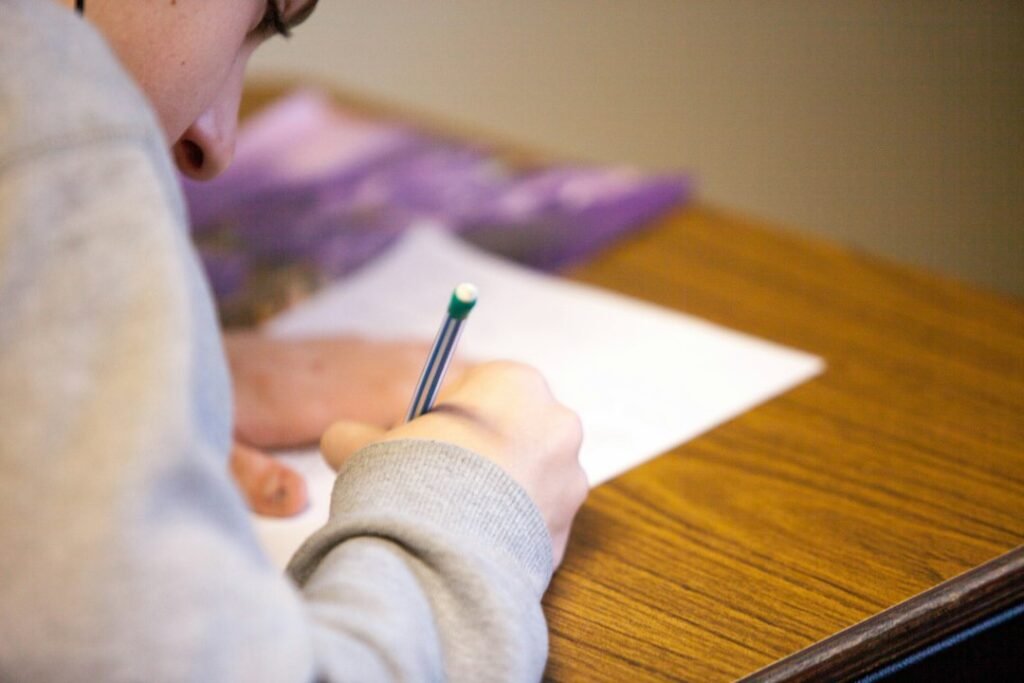
Photo by <a href="https://unsplash.com/@benmullins?utm_source=WP+Agent&utm_medium=referral">Ben Mullins</a> on <a href="https://unsplash.com/?utm_source=WP+Agent&utm_medium=referral">Unsplash</a>
What Is the Best AI Checker for Teachers? Top Tools in 2026
Artificial intelligence has completely changed the way students research and write. Tools such as ChatGPT can help students brainstorm ideas, improve grammar, and create drafts within seconds. However, this has also created a new challenge for teachers: how can they determine whether a student’s work was written independently or generated with AI?
This is where AI checkers can help.
But what is the best AI checker for teachers? There is no single tool that is perfect for every classroom. The right choice depends on whether you are a school teacher, university professor, private tutor, or part of a larger educational institution.
In this article, we’ll compare some of the most useful AI checkers for teachers, look at what their own vendors say about their limitations, and explain what educators should consider before choosing one.
Why Are AI Checkers Important for Teachers?
Teachers already have to evaluate assignments, essays, research papers, and other written work — often dozens or hundreds of them. Manually identifying AI-generated writing can be extremely difficult, especially when students edit or rewrite AI-generated content before submitting it.
AI detection tools analyze writing patterns and provide an indication of whether a piece of content may have been generated or assisted by artificial intelligence.
However, teachers should remember that an AI detection score is not absolute proof that a student used AI. Detection systems can produce both false positives and false negatives, so a result should be considered alongside the student’s previous work, drafts, writing style, and overall academic performance — not treated as a verdict on its own.
1. Turnitin – Best for Schools and Universities
Turnitin is one of the best-known academic integrity platforms and is widely associated with plagiarism and similarity checking. Its AI writing detection is integrated into its existing similarity-report workflow, which is particularly useful for schools, colleges, and universities that already use Turnitin.
Worth noting: Turnitin itself publicly cautions that its AI writing detection technology can sometimes misidentify human-written or AI-generated text, and states it should not be the sole basis for taking adverse action against a student. That’s a useful reminder from the vendor itself, not just a general caveat about AI detectors.
Why teachers may like Turnitin:
- Designed for academic environments
- Similarity and AI-related checking in one platform
- Suitable for schools and universities
- Useful for reviewing large numbers of assignments
- Familiar to many educators
Best for:
Schools, colleges, and universities that want an institutional solution.
2. GPTZero – Best for Individual Teachers
GPTZero has become a popular choice among educators looking for a dedicated AI detection tool. It is designed around education and can help teachers analyze student writing for signs of AI-generated content.
Its educator tools include a free scanning option, batch assignment uploads, Google Docs writing reports, plagiarism checking, and integrations with learning-management systems. One particularly useful feature is its focus on the writing process rather than just the final essay — teachers can use writing-process information to better understand how a document was created.
Why teachers may like GPTZero:
- Education-focused features
- Free scanning option available
- Batch assignment checking
- Writing-process analysis
- Plagiarism checking and LMS integrations
Best for:
Teachers who want an accessible AI detection solution for classroom use.
3. Originality.ai – Best for Detailed Academic Analysis
Originality.ai offers an Academic AI Detection model built specifically for educational writing, alongside broader content-analysis capabilities. This can make it useful for educators who want more than a simple yes-or-no AI result.
According to Originality.ai, its Academic model reports 99%+ accuracy with a false-positive rate below 1%. These are vendor-reported figures rather than independently verified numbers, so teachers should still interpret results carefully rather than treating any single percentage as conclusive evidence.
Why teachers may like Originality.ai:
- Academic-focused AI detection model
- Detailed analysis, not just a single score
- Designed for student assignments
- Useful for written assignments
- Suitable for users who want deeper content analysis
Best for:
Educators who want a dedicated academic detection model with detailed AI-content analysis.
4. Copyleaks – Best for AI, Plagiarism, and Multilingual Checking
Copyleaks combines AI detection with plagiarism checking, making it another option for educational institutions. This can be particularly useful when a teacher wants to examine whether submitted work contains copied material as well as potentially AI-generated text.
It’s also worth considering in classrooms with multilingual students, since Copyleaks supports checking across multiple languages — useful for institutions where students submit work in more than one language.
Why teachers may like Copyleaks:
- AI detection
- Plagiarism checking
- Support for multiple languages
- Support for different types of content
- Useful for institutional environments
Best for:
Schools and organizations looking for AI detection, plagiarism checking, and multilingual support together.
What Is the Best AI Checker for Teachers?
The answer depends on your specific requirements.
If you work at a university or school that already uses an academic integrity platform, Turnitin can be a practical choice. If you’re an individual educator looking for a tool designed specifically around teachers and students, GPTZero may be worth exploring. If detailed academic content analysis is important to you, Originality.ai can be another option. Meanwhile, Copyleaks is useful for institutions that want AI detection, plagiarism checking, and multilingual support in the same ecosystem.
Here is a simple comparison:
| AI Checker | Best For | Main Advantage |
|---|---|---|
| Turnitin | Schools & Universities | Academic workflow |
| GPTZero | Individual Teachers | Educator-focused tools |
| Originality.ai | Academic Content Analysis | Dedicated academic detection model |
| Copyleaks | Institutions | AI + plagiarism + multilingual |
Are AI Checkers 100% Accurate?
No AI detector should be considered perfect — and teachers shouldn’t have to take that on faith, since the vendors themselves say so. Turnitin explicitly warns educators that its AI writing detection may misidentify content and should not be used as the sole basis for taking action against a student.
AI detection technology is constantly evolving, and students can modify, paraphrase, or rewrite AI-generated content, which makes detection more difficult. At the same time, human-written content can sometimes be incorrectly flagged as AI-generated — and there are particular concerns about false positives among students who write in English as an additional language.
This is why teachers should avoid making serious academic decisions based solely on an AI detection percentage. Instead, use the result as a reason to investigate further.
What Should Teachers Do When an Assignment Is Flagged?
If an AI checker indicates that an assignment may contain AI-generated writing, teachers can take several additional steps:
- Review the highlighted sections the tool flagged, rather than just the overall score.
- Compare previous work — is the writing style significantly different from earlier assignments?
- Ask the student to explain their work — give them an opportunity to walk through their ideas, sources, and writing process.
- Check drafts and revision history, which can provide useful evidence about how the assignment developed.
- Look at sources — ask the student about the sources they used and why they selected them.
- Follow school policy — every school or university should have its own rules regarding AI use, and teachers should follow those policies rather than relying entirely on an automated detection score.
AI Checkers Should Support Teachers, Not Replace Them
The purpose of an AI checker should be to assist educators — not replace their judgment. For example, suppose a student who normally submits simple writing suddenly produces a highly polished academic essay. An AI detection result could encourage the teacher to investigate further, but the teacher should consider the complete picture before reaching a conclusion.
This matters even more because students may legitimately use AI for things like brainstorming, grammar improvement, translation, or general learning assistance, depending on their institution’s rules. So the key question isn’t always simply “Did the student use AI?” — it may also be “How did the student use AI, and was that use allowed?” Treating every AI-assisted step as equivalent to full-on cheating can be unfair to students who used these tools within the rules.
This approach is more fair to students and helps reduce the possibility of false accusations.
How to Choose the Right AI Checker
Before choosing an AI detection tool, teachers should consider several factors:
Accuracy and Transparency
Look for tools that provide transparent information about their detection capabilities and limitations, rather than promising perfect detection.
Ease of Use
A complicated platform can waste valuable teaching time. The tool should make checking assignments simple.
Plagiarism Detection
If you want both AI and plagiarism checking, choose a platform that provides both capabilities.
Classroom and School Integration
For schools and universities, integrations with existing learning-management platforms can make the workflow much easier.
Privacy
Student assignments may contain personal information, so teachers should understand how a service stores and processes uploaded student work.
Cost
Individual teachers may prefer affordable or free options, while larger institutions may require paid plans with administrative features.
Final Conclusion
So, what is the best AI checker for teachers?
There is no universal answer. Turnitin is a strong choice for schools and universities already using an academic-integrity platform, while GPTZero can be a useful option for individual educators. Originality.ai is worth considering for dedicated academic AI detection, and Copyleaks can be useful for organizations that want AI detection, plagiarism checking, and multilingual support together.
Most importantly, teachers should remember that AI detection tools are not perfect — a point the vendors themselves acknowledge. An AI score should be treated as an indicator rather than unquestionable evidence.
The best approach is to combine AI detection with student writing history, drafts, research sources, classroom performance, and direct communication. Used responsibly, AI checkers can help teachers protect academic integrity while still giving students a fair opportunity to explain their work — and to distinguish between AI use that broke the rules and AI use that didn’t.
Ultimately, what is the best AI checker for teachers depends on the teacher’s goals, institution, budget, and required features. The best tool is the one that supports better decisions — not simply the one that produces the highest detection score.
Looking for more classroom AI tools beyond detection? See our guide to AI Tools for Teachers.