
AI in Medical Diagnosis: How Artificial Intelligence Is Transforming Healthcare in 2026
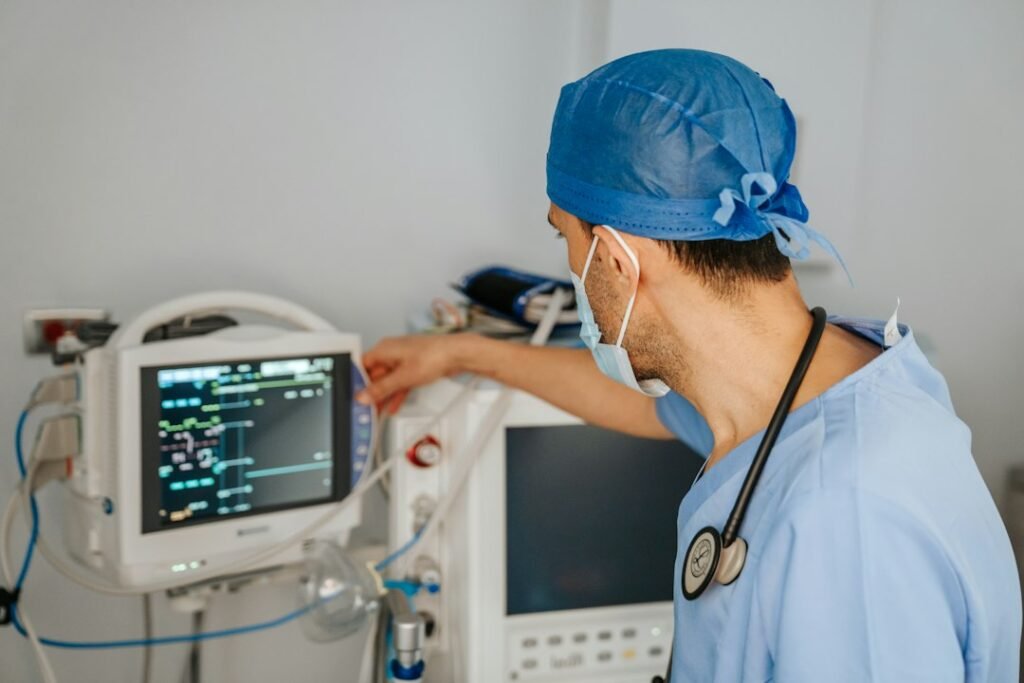
Photo by <a href="https://unsplash.com/@xbmpro?utm_source=WP+Agent&utm_medium=referral">César Badilla Miranda</a> on <a href="https://unsplash.com/?utm_source=WP+Agent&utm_medium=referral">Unsplash</a>
AI in Medical Diagnosis: How Artificial Intelligence Is Making Healthcare Smarter in 2026
Imagine a doctor being able to analyze thousands of medical images, patient records, laboratory results, and clinical patterns in a fraction of the time it would normally take. This is becoming increasingly possible as artificial intelligence moves deeper into modern medicine.
AI in medical diagnosis is emerging as one of the most important applications of healthcare technology, helping medical professionals analyze complex information, identify patterns, prioritize cases, and support clinical decision-making.
The technology is not about replacing doctors. Instead, its biggest potential may be helping healthcare professionals make faster, better-informed decisions while reducing some of the workload surrounding diagnosis.
What Is AI in Medical Diagnosis?
AI in medical diagnosis refers to the use of artificial intelligence and machine-learning systems to analyze healthcare information and assist professionals in identifying possible diseases or medical conditions.
AI can process different types of information, including:
- Medical images
- Laboratory results
- Patient records
- Vital signs
- Clinical notes
- Genetic information
- Medical literature
- Sensor and wearable data
Advanced models can recognize patterns across large datasets that may be difficult to identify manually.
However, an AI-generated result should not automatically be treated as a final medical diagnosis. Clinical professionals remain essential for interpretation, context, and patient care.
How AI Is Changing Medical Diagnosis
1. Medical Imaging
Medical imaging is one of the most established areas for healthcare AI.
AI systems can analyze X-rays, CT scans, MRI images, ultrasound images, and other medical imaging data to help identify abnormalities.
For example, an AI system might flag an image that appears unusual so a radiologist can examine it more closely.
2. Early Disease Detection
One of the biggest promises of AI is detecting potential problems earlier.
Machine-learning models can analyze large amounts of historical medical data to identify patterns associated with certain conditions.
Earlier detection can sometimes provide healthcare professionals with an opportunity to investigate a potential problem before it becomes more serious.
However, AI predictions must be carefully validated because false positives and false negatives can occur.
3. Personalized Diagnosis
Every patient is different.
Two people with similar symptoms may have completely different underlying causes.
AI can analyze multiple sources of patient information simultaneously and potentially help clinicians identify patterns relevant to an individual patient.
This could support a more personalized diagnostic process instead of relying exclusively on broad population-level patterns.
4. Multimodal AI
The next step beyond single-source analysis is multimodal AI — models designed to combine medical images, lab results, patient history, and even genetic data into a single, more complete picture of a patient’s condition, rather than analyzing each source in isolation.
This is also where generative AI is starting to intersect with diagnosis: some systems can now help draft clinical documentation and summarize patient records faster, freeing up time clinicians would otherwise spend on paperwork so they can focus on interpreting the diagnostic picture itself. We cover this side of the technology in more depth in our guide to Generative AI in Healthcare.
AI Can Analyze Huge Amounts of Data
Modern healthcare produces enormous quantities of information.
A single patient may have years of medical records, laboratory results, imaging studies, prescriptions, clinical notes, and other information.
Human professionals have limited time to review all of this data.
AI can process large datasets quickly and help organize potentially relevant information.
This doesn’t mean AI understands a patient exactly like a doctor does. Rather, it can act as a powerful information-processing assistant.
AI and Rare Diseases
Rare diseases can be particularly difficult to diagnose because physicians may encounter them infrequently.
AI systems trained on appropriate medical datasets could potentially help identify unusual combinations of symptoms or patterns that deserve further investigation.
This could provide clinicians with additional information when dealing with complicated cases.
The final diagnosis, however, still requires appropriate medical evaluation and testing.
AI-Powered Clinical Decision Support
AI can also support doctors after the initial diagnostic process.
A clinical decision-support system may help organize relevant information, identify potential considerations, or provide access to medical knowledge.
This can be especially useful when healthcare professionals need to process large amounts of information quickly.
The ideal model is not:
AI decides → Doctor follows
Instead:
AI analyzes → Doctor evaluates → Patient receives appropriate care
This distinction is extremely important.
The Benefits of AI in Medical Diagnosis
The potential advantages of AI in medical diagnosis include:
- Faster analysis of medical information
- Support for medical imaging
- Earlier identification of potential abnormalities
- Better organization of patient data
- Assistance with complex cases
- Support for clinical decision-making
- Potential reduction in repetitive workload
- More personalized healthcare
But these benefits depend on the quality of the AI system, the data used to develop it, and the environment in which it is deployed.
Can AI Diagnose Patients Without Doctors?
This is one of the most misunderstood aspects of healthcare AI.
An AI model may be able to identify patterns or produce a prediction, but medical diagnosis involves much more than pattern recognition.
Doctors consider:
- Symptoms
- Medical history
- Physical examination
- Test results
- Patient circumstances
- Risk factors
- Treatment options
- Clinical guidelines
- Patient preferences
AI may contribute to this process, but it cannot automatically replace the complete clinical evaluation.
For high-stakes healthcare decisions, human oversight remains extremely important.
Major Challenges
Accuracy
An AI system can make mistakes. Even highly advanced models may produce incorrect predictions in certain situations.
Bias
If training data does not adequately represent different populations, AI performance may vary between patient groups.
Privacy
Medical information is highly sensitive. Healthcare organizations need strong security and privacy protections when implementing AI.
Explainability
Doctors may need to understand why an AI system produced a particular result, especially when the outcome could influence patient care.
Overreliance
Healthcare professionals should avoid treating AI output as automatically correct.
AI should support clinical expertise rather than encourage blind trust in automated predictions.
The Role of AI in Emergency Healthcare
Emergency departments deal with large numbers of patients and limited time.
AI could potentially help prioritize information, identify patterns in clinical data, and assist healthcare professionals in recognizing cases that may require urgent attention.
This could become increasingly valuable as hospitals look for ways to improve efficiency without compromising patient safety.
AI and Remote Healthcare
Telemedicine is another area where diagnostic AI could become useful.
When patients are not physically present in a hospital, AI-powered tools could potentially help organize symptoms, patient information, and digital health measurements for healthcare professionals.
Wearable devices could also provide additional information that may support remote monitoring.
This could contribute to a more connected healthcare system where patients can receive support beyond traditional clinical settings.
What Does the Future Look Like?
The future of AI in medical diagnosis will likely involve collaboration between intelligent software and healthcare professionals.
Doctors may use AI assistants to review patient information before appointments, analyze medical images, summarize records, identify relevant research, and support clinical decision-making.
Meanwhile, patients could benefit from faster access to appropriate healthcare services and more personalized monitoring.
The biggest opportunity isn’t simply making AI more powerful.
Why 2026 Is an Important Year
Healthcare AI is moving from experimentation toward practical implementation.
Hospitals and technology companies are increasingly testing AI in real-world workflows, while regulators and medical organizations are developing frameworks for responsible use.
This means the next stage of healthcare AI will be judged not just by how impressive a model looks in a demonstration, but by whether it can produce reliable results in real clinical environments.
Conclusion
AI in medical diagnosis has the potential to transform how healthcare professionals analyze information and identify possible diseases.
From medical imaging and early detection to clinical decision support and remote healthcare, artificial intelligence can help doctors process information faster and potentially improve healthcare workflows.
But AI should not be viewed as a replacement for medical professionals.
The future of diagnosis will most likely be built around human expertise enhanced by artificial intelligence.
When technology and medical professionals work together responsibly, AI could make healthcare faster, more data-driven, and more personalized—while keeping patient safety and human judgment at the center.
For the bigger picture of how AI is being used across medicine, see our full guide to AI in Healthcare.







1 thought on “AI in Medical Diagnosis: How Artificial Intelligence Is Transforming Healthcare in 2026”