
Machine Learning in Healthcare: AI Transforming Modern Healthcare
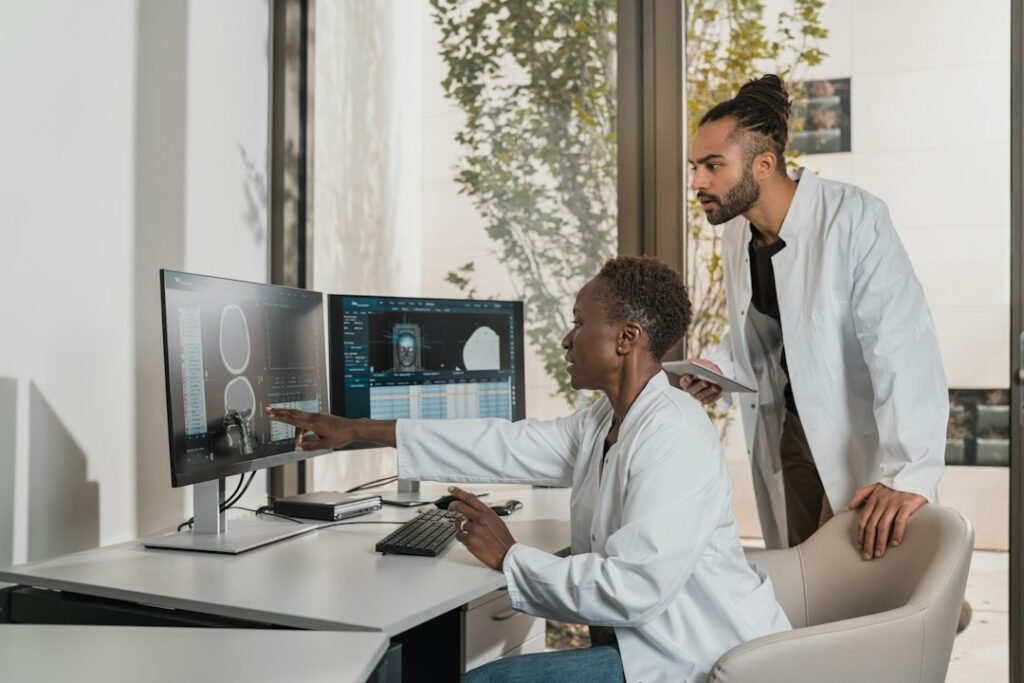
Photo by <a href="https://unsplash.com/@accuray?utm_source=WP+Agent&utm_medium=referral">Accuray</a> on <a href="https://unsplash.com/?utm_source=WP+Agent&utm_medium=referral">Unsplash</a>
Machine Learning in Healthcare: Transforming Modern Healthcare With Artificial Intelligence
Healthcare is one of the most important industries in the world, and technology is rapidly changing how medical services are delivered. Among the most powerful technologies driving this transformation is machine learning in healthcare. Machine learning enables computers to analyze large amounts of medical data, identify patterns, support clinical decisions, and help healthcare professionals provide faster and more personalized care — see our general guide to Machine Learning for the underlying fundamentals, or our broader overview of AI in Healthcare for the full picture of how these technologies fit together.
From predicting diseases to improving medical imaging and optimizing hospital operations, machine learning and healthcare are becoming increasingly connected. At the same time, generative AI and conversational AI are opening new possibilities for doctors, hospitals, patients, and healthcare organizations.
What Is Machine Learning in Healthcare?
Machine learning is a branch of artificial intelligence that allows computer systems to learn from data and improve their performance without being explicitly programmed for every task.
In healthcare, machine learning systems can analyze information such as medical records, laboratory results, diagnostic images, patient histories, and other clinical data. These systems can then identify patterns that may help healthcare professionals make better-informed decisions.
A modern machine learning model healthcare system, for example, can be trained using historical patient data to identify risk factors associated with certain diseases. When new patient information is entered, the model can estimate potential risks and assist healthcare professionals in deciding what should be investigated further.
How Machine Learning Is Changing Healthcare
The use of machine learning is expanding across different areas of healthcare. One of its biggest advantages is its ability to process enormous amounts of information much faster than humans can.
1. Early Disease Detection
Machine learning can help identify potential signs of diseases at an early stage. By analyzing medical images, test results, and patient information, AI-powered systems can highlight patterns that may require further medical attention.
Early detection can be particularly valuable for conditions where timely diagnosis can significantly improve treatment options and patient outcomes.
2. Medical Imaging and Diagnostics
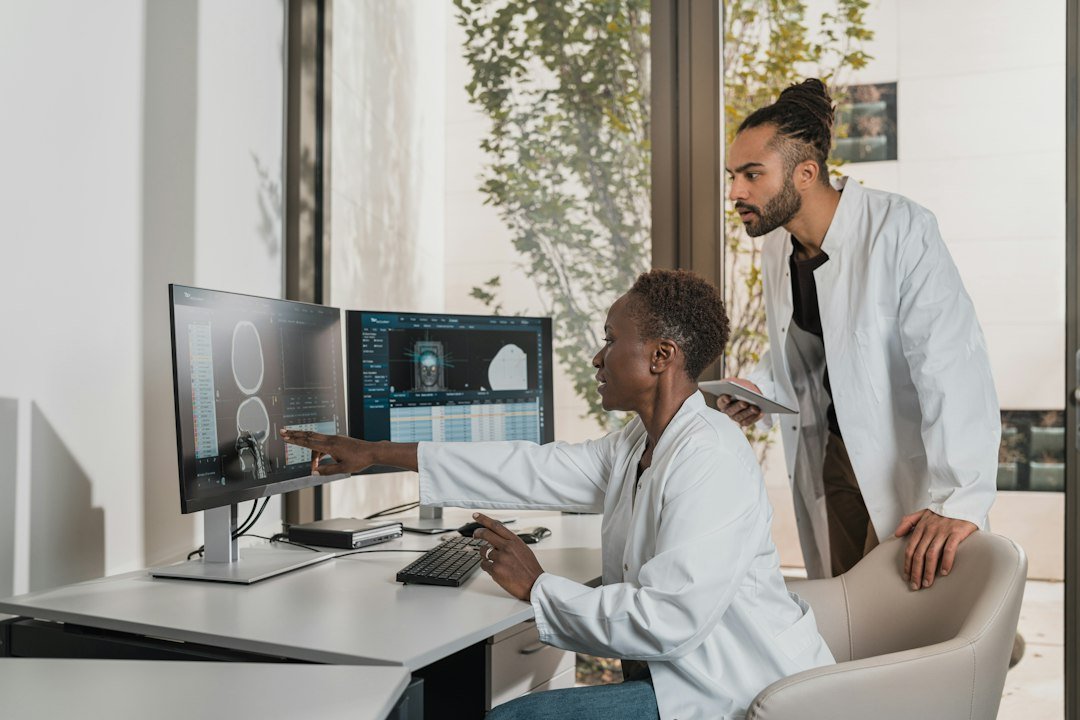
Medical imaging generates huge amounts of data every day. Machine learning can assist healthcare professionals in analyzing X-rays, CT scans, MRIs, and other diagnostic images.
AI systems can identify suspicious areas in images and help doctors focus their attention on cases that may require closer examination. Importantly, these technologies are generally designed to support healthcare professionals rather than replace them.
3. Personalized Treatment
Every patient is different. A treatment that works well for one person may not have the same results for another.
Machine learning can analyze patient characteristics, medical history, laboratory results, and treatment information to help healthcare professionals understand which treatment approaches may be more appropriate for individual patients.
This is one reason why machine learning and healthcare have become such an important area of research.
4. Predictive Healthcare
Another major application of machine learning is prediction.
AI models can analyze historical and real-time data to identify patients who may be at higher risk of developing certain conditions or experiencing complications. Hospitals can potentially use these insights to prioritize care and allocate resources more effectively.
Generative AI in Healthcare
While traditional machine learning focuses heavily on analyzing data and making predictions, generative AI can create new content based on patterns learned from existing information.
Generative AI in healthcare has attracted significant attention because it can assist with documentation, information summarization, patient communication, medical education, and other administrative or knowledge-based tasks.
For example, generative AI tools can help summarize lengthy medical information, draft administrative documents, or provide structured answers to healthcare-related questions.
However, healthcare organizations must implement strong safeguards because inaccurate AI-generated information can have serious consequences.
Generative AI Healthcare Applications
The potential of generative AI healthcare solutions goes beyond simple text generation. They can potentially assist healthcare professionals with documentation, research, education, communication, and information management.
One important application is reducing administrative workloads. Healthcare professionals often spend considerable time documenting information and handling repetitive tasks. Carefully implemented AI tools can help reduce some of this burden and allow professionals to spend more time interacting with patients.
Another promising area is medical education. Generative AI can help create educational explanations and learning materials for students and healthcare professionals, although expert review remains important.
Conversational AI in Healthcare
Patients often need answers to basic questions before or after visiting a healthcare professional. This is where conversational AI in healthcare can play a useful role.
AI-powered chatbots and virtual assistants can potentially help patients navigate healthcare services, understand general health information, schedule appointments, receive reminders, or find relevant resources.
For example, a hospital could use a conversational AI assistant to answer common questions about departments, appointment procedures, visiting hours, or preparation instructions.
However, conversational AI should not be treated as a replacement for qualified medical professionals, particularly when a patient has urgent or complex symptoms.
AI in Hospitals
The concept of AI in hospitals covers much more than diagnosis. Artificial intelligence can potentially support hospital administration, patient management, medical imaging, scheduling, resource allocation, and operational decision-making.
Hospitals generate enormous quantities of information every day. AI can help organize and analyze this information, allowing healthcare organizations to identify patterns and improve workflows.
For example, AI-based systems may help hospitals forecast patient demand and manage resources more efficiently. This can potentially reduce delays and improve the overall patient experience.
Artificial Intelligence in Hospital Management
The use of artificial intelligence in hospital environments can also improve administrative processes.
Hospitals deal with appointment scheduling, staff management, patient records, billing, inventory, and many other operational tasks. In more detail, AI can potentially support:
- Appointment scheduling
- Patient flow management
- Hospital resource planning
- Medical documentation
- Inventory management
- Staff scheduling
- Predictive analytics
Automating certain repetitive processes can reduce manual workload and improve efficiency.
AI can also help identify unusual patterns in operational data, allowing hospital administrators to investigate potential problems earlier.
Generative AI for Healthcare Professionals
The potential of generative AI for healthcare is especially significant for professionals who deal with large volumes of information.
Doctors, nurses, researchers, and administrative teams can potentially use AI tools to summarize information, organize documents, draft communications, and support research activities.
But AI-generated information should always be reviewed by qualified professionals when it is used in clinical or sensitive contexts. Healthcare requires a high level of accuracy, privacy, accountability, and human oversight.
Machine Learning in Drug Discovery
Developing new medicines can take many years and requires significant investment. Researchers are exploring machine learning to accelerate parts of the drug discovery process — AI models can analyze biological information, chemical structures, and existing research data to identify potentially useful relationships, helping researchers prioritize promising candidates and reduce the time spent evaluating less promising options.
Although AI cannot eliminate the need for laboratory research and clinical trials, it can potentially make certain stages of the research process more efficient.
Benefits of Machine Learning in Healthcare
Machine learning can provide several potential benefits to healthcare organizations and patients:
- Faster analysis of large datasets
- Support for early disease detection
- Improved medical image analysis
- More personalized treatment planning
- Better prediction of patient risks
- Reduced administrative workload
- Improved hospital efficiency
- Support for medical research
- Better organization of healthcare information
- Potentially improved patient experiences
These advantages explain why investment in AI and machine learning continues to grow across the healthcare sector.
Challenges of Machine Learning in Healthcare
Despite its potential, machine learning in healthcare also comes with significant challenges.
Data Privacy
Medical information is highly sensitive. Healthcare organizations must protect patient data and comply with applicable privacy and security requirements.
Accuracy and Reliability
An AI model can make mistakes. Healthcare professionals must understand the limitations of AI systems and avoid relying on automated outputs without appropriate validation.
Bias in AI Models
If training data does not adequately represent different populations, an AI system may produce biased or less reliable results for certain groups.
Human Oversight
Healthcare decisions can have life-changing consequences. AI should therefore be implemented with appropriate human oversight, particularly in clinical decision-making.
Integration With Existing Systems
Hospitals often use complex software systems and electronic health records. Integrating new AI technologies into existing infrastructure can be technically challenging and expensive.
The Future of Machine Learning in Healthcare
The future of healthcare will likely involve closer collaboration between humans and intelligent technologies.
Machine learning can help healthcare professionals process information and identify patterns, while generative AI can assist with communication and documentation. Conversational AI can improve access to basic information, and hospital AI systems can support operational efficiency.
The goal should not simply be to introduce more AI. Instead, healthcare organizations need to focus on using AI responsibly to solve real problems, improve efficiency, protect patient privacy, and support better healthcare outcomes.
Conclusion
Machine learning in healthcare is transforming how medical information is analyzed, diseases are detected, treatments are considered, and healthcare organizations operate. From predictive analytics and medical imaging to generative AI in healthcare, conversational AI in healthcare, and AI in hospitals, artificial intelligence is creating new opportunities across the healthcare ecosystem.
At the same time, these technologies come with important responsibilities. Data privacy, accuracy, bias, security, transparency, and human oversight must remain central to AI implementation.
The future of healthcare is not about replacing doctors with machines. It is about giving healthcare professionals better tools to make informed decisions, reduce repetitive work, and deliver more efficient and personalized care. When implemented responsibly, machine learning and artificial intelligence can become powerful partners in building a smarter and more effective healthcare system.







1 thought on “Machine Learning in Healthcare: AI Transforming Modern Healthcare”