
AI Data Analytics: Why Businesses Are Hiring AI Data Experts in 2026
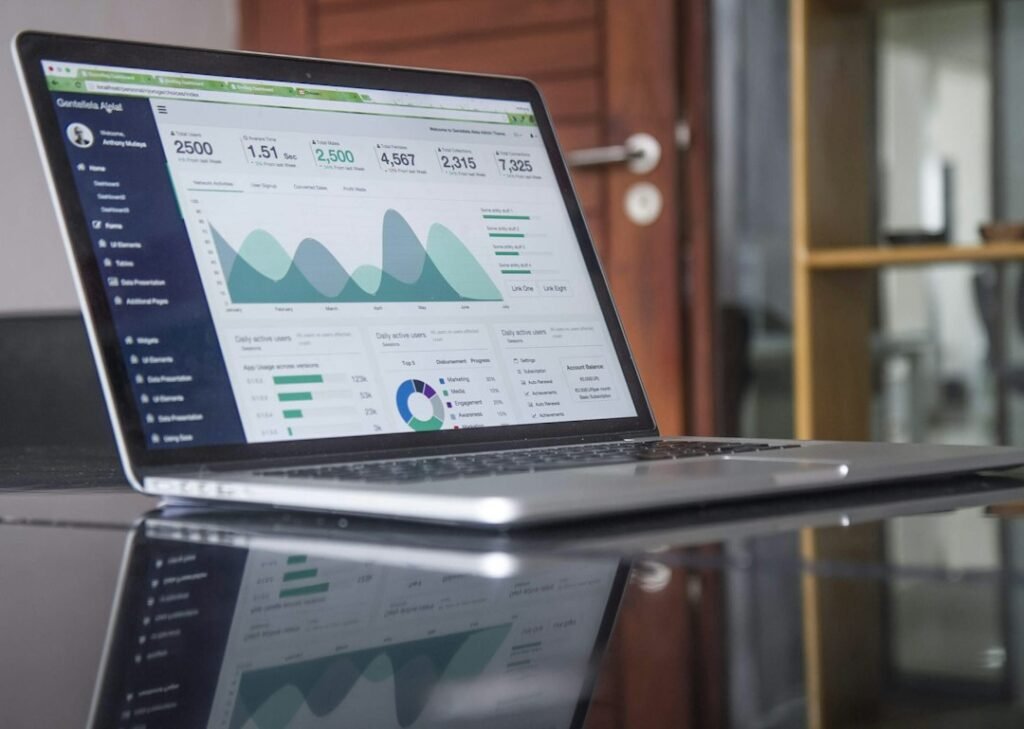
Photo by <a href="https://unsplash.com/@kmuza?utm_source=WP+Agent&utm_medium=referral">Carlos Muza</a> on <a href="https://unsplash.com/?utm_source=WP+Agent&utm_medium=referral">Unsplash</a>
AI Data Analytics: Why Businesses Are Hiring AI Data Experts in 2026
Every modern business is generating data.
Customers visit websites. People click advertisements. Online stores record purchases. Employees create reports. Marketing platforms collect campaign statistics. Customer-support systems store conversations.
The problem isn’t getting data.
The problem is understanding it.
Businesses need to know what their numbers actually mean and what they should do next.
This is where AI Data Analytics is becoming increasingly valuable.
Instead of manually spending hours sorting spreadsheets and creating reports, businesses can use AI-assisted analytics to identify patterns, summarize information, discover opportunities, and support better decision-making.
Affiliate Disclosure: Some links in this article are affiliate links. If you purchase through them, we may earn a commission at no additional cost to you.
What Is AI Data Analytics?
AI Data Analytics combines traditional data analysis with artificial intelligence.
AI can help businesses process large amounts of information much faster and identify patterns that might otherwise take a human analyst significantly more time to discover.
Depending on the project, AI can assist with:
- Data cleaning
- Data organization
- Trend detection
- Report generation
- Forecasting
- Customer analysis
- Sales analysis
- Marketing analytics
- Data visualization
- Business intelligence
- Anomaly detection
The goal isn’t simply to produce more charts.
The goal is to turn raw data into useful business decisions.
Why Businesses Need Data Experts
Imagine an online store has 100,000 visitors but only a small percentage purchase.
The business owner knows there is a problem—but where?
Is the advertising attracting the wrong audience?
Are product pages confusing?
Are prices too high?
Are customers abandoning checkout?
Is mobile performance causing problems?
Without proper analysis, the business owner is guessing.
With the right data analysis, these questions can be investigated systematically.
AI Can Analyze Data Faster
Traditional analysis can require significant manual work.
A professional might need to download information from multiple platforms, clean spreadsheets, organize columns, calculate metrics, create charts, and prepare a report.
AI-assisted tools can accelerate many of these processes.
A skilled analyst can then review the results, identify important findings, and explain what the business should do next.
This combination of automation and human judgment can make analytics much more useful.
AI Data Analytics for E-Commerce
E-commerce businesses have enormous amounts of customer data.
They can analyze:
- Best-selling products
- Average order value
- Customer acquisition costs
- Conversion rates
- Repeat purchases
- Cart abandonment
- Traffic sources
- Customer behavior
- Product performance
- Advertising results
For example, an online store might discover that one product receives thousands of visitors but produces very few sales.
That information can trigger a deeper investigation into pricing, product descriptions, images, reviews, or checkout behavior.
AI Can Help Businesses Understand Customers
Customer behavior contains valuable information.
Businesses can use analytics to identify patterns such as:
Which customers buy most frequently?
Which products are commonly purchased together?
Where do customers come from?
When are customers most likely to purchase?
Which marketing campaigns produce the best customers?
Which customers are likely to stop purchasing?
These insights can help companies make smarter marketing and sales decisions.
AI Data Analytics for Marketing
Marketing teams have more data than ever.
Facebook and Instagram campaigns.
Google Ads.
TikTok.
Email marketing.
Search traffic.
Website analytics.
CRM data.
The challenge is bringing all of this information together.
A professional analytics workflow can help businesses compare channels and determine where their marketing budget is producing the strongest results.
Instead of saying:
“We spent $10,000 on advertising.”
A business should be able to answer:
“Which campaign generated the best return, which audience converted, and where should we invest next?”
That’s the difference between collecting data and using data.
Automated Business Reports
Many companies create the same reports every week or every month.
Someone downloads data.
Someone cleans it.
Someone creates charts.
Someone writes a summary.
Someone emails the report to management.
Much of this process can potentially be automated.
An AI-assisted reporting workflow can collect information, organize it, create visualizations, and prepare a preliminary summary.
The human analyst can then review the information and focus on the important conclusions.
Predictive Analytics
One of the most exciting areas of modern analytics is forecasting.
Businesses don’t only want to know what happened yesterday.
They want to understand what could happen next.
Depending on the quality and quantity of available data, predictive analytics can help businesses estimate things such as:
- Future demand
- Sales trends
- Customer behavior
- Inventory requirements
- Potential churn
- Marketing performance
Predictions aren’t guarantees.
They are tools for making better-informed decisions.
AI Can Detect Unusual Patterns
Sometimes the most valuable insight isn’t a trend.
It’s an anomaly.
Imagine a company normally receives 500 orders per day.
Suddenly, orders fall to 250.
Or advertising costs suddenly increase.
Or website conversions suddenly drop.
Automated monitoring can identify unusual changes and alert the appropriate team.
This can help businesses react before a small problem becomes a major one.
Why Human Analysts Are Still Important
AI can process data quickly.
But businesses still need people who understand what the data means.
A chart can show that sales dropped 20%.
It doesn’t automatically explain why.
Perhaps a competitor launched a new product.
Perhaps the website experienced technical problems.
Perhaps advertising targeting changed.
Perhaps inventory ran out.
Perhaps a major customer stopped purchasing.
Human reasoning and business context remain essential.
That’s why the strongest approach combines AI + analytics expertise + business knowledge.
What Can an AI Data Analyst Offer?
A professional freelancer can provide services such as:
Business Dashboard Creation
Build dashboards that show important business metrics in an easy-to-understand format.
Sales Analysis
Analyze sales performance and identify trends, opportunities, and weak areas.
Marketing Analytics
Compare campaigns, channels, audiences, and conversion performance.
Customer Analytics
Identify customer segments and behavioral patterns.
Automated Reporting
Create workflows that automatically collect and organize business data.
Data Visualization
Turn complicated datasets into charts and dashboards that decision-makers can understand quickly.
Predictive Analysis
Use historical information to help businesses understand potential future trends.
Why Businesses Hire Freelancers for Data Analytics
Not every company needs a full-time data scientist.
A small business may need an expert for one project.
A startup may need help building its first dashboard.
An e-commerce company may need someone to analyze customer behavior.
A marketing agency may need recurring reporting.
Hiring a freelancer allows businesses to access specialized expertise without necessarily building a large internal analytics department.
How AI Data Analytics Can Save Businesses Money
Poor decisions are expensive.
A company may waste thousands of dollars advertising to the wrong audience.
An online store may keep investing in products customers don’t want.
A business may hire more employees when automation could solve the workload problem.
A company may overlook a profitable customer segment simply because nobody analyzed the data.
Good analytics can help expose these problems.
The objective isn’t simply to generate reports.
It’s to make better decisions with the information the business already has.
What Makes a Good Data Analytics Freelancer?
Businesses shouldn’t hire someone simply because they know how to use an AI tool.
A strong freelancer should understand:
- Data analysis
- Statistics
- Business metrics
- Spreadsheets
- Dashboards
- Data visualization
- AI tools
- Automation
- Reporting
- Business strategy
Most importantly, they should be able to explain complicated findings in simple language.
A business owner doesn’t want a 50-page spreadsheet full of numbers.
They want to know:
What happened?
Why did it happen?
What should we do next?
Ready to Turn Your Data Into Business Insights?
Your business may already have the information needed to make better decisions.
The problem could simply be that the data isn’t being analyzed properly.
With professional AI Data Analytics, businesses can transform scattered information into dashboards, reports, insights, trends, and actionable recommendations.
You don’t need to analyze everything at once.
Start with the data that matters most to your business.
Sales.
Marketing.
Customers.
Operations.
Then build from there.
Hire an AI Data Analytics Expert
Need help analyzing business data, creating dashboards, automating reports, understanding customer behavior, or finding growth opportunities?
Get professional data analysis built around your actual business goals.
👉 Hire an AI Data Analytics expert
Final Thoughts
Businesses have more data than ever before.
The competitive advantage isn’t simply having data.
It’s knowing what the data is telling you.
AI can make analysis faster, automation can reduce repetitive work, and experienced analysts can turn the results into practical business decisions.
That’s why AI Data Analytics is becoming an important freelance service for modern businesses.
The companies that learn to use their data effectively can make smarter decisions, identify opportunities faster, and avoid expensive guesswork.
Your data already contains valuable information. The right expert can help you find it.