
AI in Heart Health: How Artificial Intelligence Is Transforming Cardiovascular Care
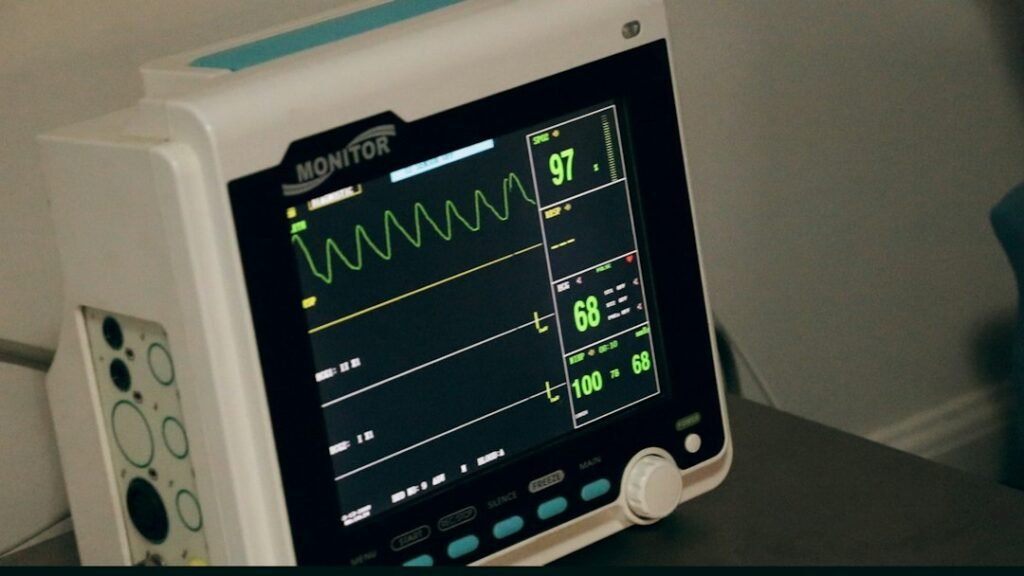
Photo by <a href="https://unsplash.com/@jairlazarofuentes?utm_source=WP+Agent&utm_medium=referral">Jair Lázaro</a> on <a href="https://unsplash.com/?utm_source=WP+Agent&utm_medium=referral">Unsplash</a>
AI in Heart Health: How Artificial Intelligence Is Transforming Cardiovascular Care
Heart disease remains one of the world’s major health challenges, and detecting cardiovascular problems early can be critical — timely evaluation and treatment can meaningfully reduce the risk of serious complications.
Traditional cardiovascular care already relies on tools such as ECGs, blood tests, ultrasound, CT scans, and MRI. Artificial intelligence is now being researched as an additional layer of analysis on top of these tools — helping doctors process the resulting datasets faster and spot patterns that might otherwise be missed.
What Is AI in Cardiology?
AI in cardiology refers to the use of artificial intelligence and machine-learning systems to analyze cardiovascular information. Researchers are actively studying AI for cardiovascular risk prediction, diagnosis, imaging, ECG analysis, and personalized care — and recent reviews show these applications expanding across nearly every area of cardiovascular medicine.
The goal isn’t to replace cardiologists. It’s to give medical professionals additional, faster analysis that supports — rather than substitutes for — clinical judgment.
AI Heart Disease Detection
Doctors often need to examine many different types of information before identifying a cardiovascular problem. AI can analyze these data sources together and highlight patterns that deserve additional attention, helping healthcare professionals prioritize certain cases and potentially catch risks earlier.
An AI-generated result is not automatically a medical diagnosis, though — a qualified healthcare professional still needs to interpret the information in the context of the patient’s full history.
Early detection matters because cardiovascular problems can develop without obvious symptoms, which is part of why AI-supported screening is increasingly discussed as a piece of preventive healthcare.
AI and ECG Analysis
An electrocardiogram (ECG or EKG) records the electrical activity of the heart. AI systems can analyze ECG signals and search for patterns associated with different cardiac conditions, including heart rhythm abnormalities and other cardiovascular problems.
Reviews published in 2026 describe AI-based ECG analysis as an active and expanding area of cardiovascular research — an additional layer of support that helps clinicians examine ECG recordings for abnormalities more efficiently, not a replacement for that examination.
Predicting Heart Disease Risk
Traditional cardiovascular risk calculators use factors such as age, blood pressure, cholesterol, and other health information. Machine-learning models can potentially combine a much larger number of variables to build a more complete risk picture.
An important caveat: a 2026 scoping review found that AI-based cardiovascular risk-prediction tools show real promise, but the researchers also identified major gaps in external validation and calibration that currently limit how ready these tools are for widespread clinical deployment. In other words, promising research results don’t automatically mean a tool is ready for your doctor’s office yet — and that gap is worth understanding rather than glossing over.
AI and Medical Imaging in Cardiology
Heart specialists use a range of imaging technologies to examine the cardiovascular system, including:
- Echocardiography
- CT scans
- MRI
- Nuclear imaging
- Coronary CT angiography
AI can help analyze these images, automate certain measurements, and identify structural patterns related to cardiovascular disease. Current research is also exploring AI-assisted cardiovascular imaging specifically for detecting and characterizing atherosclerosis — as imaging technology and AI models keep improving, this combination is becoming increasingly valuable in hospitals and specialized cardiac centers.
AI and Heart Failure
Heart failure is another area under active investigation. Researchers are studying whether AI can help with diagnosis, risk stratification, and treatment-related decisions — a 2026 review specifically examined AI’s role across heart-failure diagnosis, risk assessment, and treatment.
The potential benefit is that AI could analyze multiple sources of patient information simultaneously and help clinicians identify higher-risk heart-failure patients sooner.
Wearables and Smart Heart Monitoring
Smartwatches and other wearable devices can collect heart rate and activity data continuously throughout the day. AI can analyze this information and look for unusual patterns — instead of relying solely on occasional clinic visits, patients increasingly have access to continuous insight into their own heart health.
Researchers are exploring combinations of wearable data, ECG signals, blood-pressure measurements, and other physiological data for cardiovascular risk assessment, which could eventually support more continuous approaches to monitoring heart health. Wearable readings should never be treated as a diagnosis on their own, though — professional evaluation remains essential. For more on this category of device more broadly, see our guide to AI Wearables in Healthcare.
Personalized Cardiovascular Care
Every patient has different risk factors and medical circumstances. AI could help doctors combine information from medical records, imaging, ECGs, laboratory tests, and wearable devices to support more individualized risk assessment and treatment planning — rather than treating every patient according to the same generalized model.
Recent research suggests that combining multiple types of data this way is one of the most promising directions in cardiovascular AI right now.
Benefits of AI in Cardiology
- Earlier identification of cardiovascular risk
- Faster analysis of medical data
- AI-assisted ECG interpretation
- Support for medical imaging
- Personalized risk assessment
- Continuous monitoring through digital devices
- Assistance for healthcare professionals handling large caseloads
- Better organization of large cardiovascular datasets
These are potential benefits, not guarantees — AI tools still need to be properly validated before they can safely influence real clinical decisions.
Can AI Replace Cardiologists?
No. AI can process information quickly, but cardiologists and other healthcare professionals provide clinical judgment and weigh the complete medical picture — something a model working from data alone can’t fully replicate.
Current research consistently emphasizes that many AI models still require stronger external validation, better calibration, and testing across different populations before routine clinical use. The most realistic future is AI supporting doctors, not replacing them.
Challenges of AI in Cardiology
Data Quality
AI systems depend entirely on the quality of the data used to train and test them — poor-quality or incomplete data can meaningfully affect performance.
Algorithmic Bias
If training datasets don’t adequately represent different populations, an AI system may perform inconsistently across patient groups.
Privacy
Medical AI systems process highly sensitive health information, making privacy and cybersecurity essential considerations throughout development and deployment.
Clinical Validation
A model performing well on a research dataset doesn’t automatically mean it will work equally well in everyday hospitals. Recent reviews repeatedly identify external validation, fairness, calibration, and real-world clinical testing as the main barriers standing between promising research and widespread clinical adoption.
The Future of AI in Cardiology
The future of AI in heart health could involve systems that combine information from ECGs, medical images, laboratory tests, electronic health records, and wearable devices — rather than analyzing each piece of information separately, AI could build a more comprehensive picture of a patient’s cardiovascular risk.
This approach may support earlier detection and more personalized cardiovascular care, but it depends on reliable technology, solid clinical evidence, strong privacy protections, and appropriate oversight — not just more powerful models.
Conclusion
AI in heart health is becoming an important area of modern medical research, with real potential across heart-disease detection, cardiovascular risk prediction, ECG analysis, medical imaging, heart-failure care, and personalized treatment.
At the same time, AI should not be treated as a replacement for professional cardiovascular diagnosis or treatment. As research continues, better validation and real-world testing will determine which of these technologies can genuinely improve outcomes rather than just look promising in a research paper.
The future of cardiology isn’t AI versus doctors — it’s AI working alongside doctors to make heart care earlier, smarter, and more personalized.
For the bigger picture of how AI is being used across medicine, see our full guide to AI in Healthcare.







1 thought on “AI in Heart Health: How Artificial Intelligence Is Transforming Cardiovascular Care”