
AI and the World: How Artificial Intelligence Is Transforming Global Society
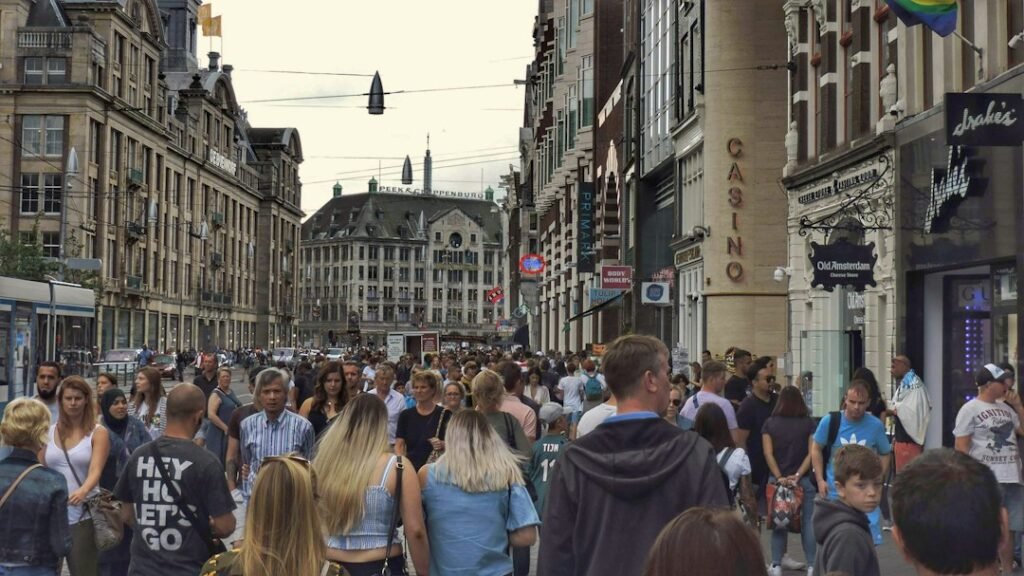
Photo by <a href="https://unsplash.com/@sebenrique12?utm_source=WP+Agent&utm_medium=referral">Sebastian Enrique</a> on <a href="https://unsplash.com/?utm_source=WP+Agent&utm_medium=referral">Unsplash</a>
AI and the World: How Artificial Intelligence Is Transforming Global Society
Artificial intelligence has moved from being a futuristic concept to becoming a powerful part of everyday life. People use AI to search for information, create content, analyze data, communicate, learn new skills, and automate tasks.
Businesses are using AI to improve productivity, while scientists and researchers are applying it to complex problems in healthcare, climate science, engineering, and many other fields.
The relationship between AI and the world is becoming deeper every year. Artificial intelligence is not changing just one industry—it is influencing economies, workplaces, education, communication, healthcare, transportation, and the way people interact with technology.
What Is Artificial Intelligence?
Artificial intelligence refers to technologies that allow computer systems to perform tasks that traditionally require human intelligence.
These tasks can include recognizing patterns, understanding language, analyzing information, generating content, making predictions, and supporting decisions.
Modern AI systems can process enormous amounts of information and perform certain tasks at remarkable speed.
However, AI is not human intelligence. It can make mistakes, misunderstand context, and produce incorrect information. Human judgment remains essential, particularly when decisions have important consequences.
AI Is Changing the Global Economy
One of the biggest effects of AI and the world can be seen in the global economy.
Businesses are using AI to automate repetitive processes, analyze customer behavior, improve marketing, optimize operations, and develop new products.
Small businesses can also benefit from AI because many tools are now available through affordable software platforms.
Entrepreneurs can use AI for brainstorming, content creation, customer support, data analysis, and productivity.
This means advanced technology is becoming more accessible to businesses of different sizes.
AI and the Future of Work
The workplace is changing as AI becomes more capable.
Some repetitive tasks can be automated, allowing employees to focus on activities that require creativity, communication, strategic thinking, and human judgment.
At the same time, some jobs may change significantly as AI takes over portions of existing workflows.
This does not necessarily mean that technology will eliminate work altogether. History shows that technological change can create new industries and new types of employment.
The challenge is ensuring that workers have opportunities to learn new skills and adapt to changing demands. For a broader look at how AI is reshaping daily life and the future of work, see our guide to How AI Is Changing the World.
AI in Healthcare
Healthcare is one of the areas where AI could have a significant global impact.
AI systems can assist with medical image analysis, research, administrative tasks, patient monitoring, and other healthcare applications.
Researchers can also use AI to analyze large scientific datasets and accelerate certain areas of medical research.
However, healthcare requires careful oversight. AI should support qualified professionals rather than be treated as an unquestionable source of medical decisions.
AI and Education
Education is also being transformed.
Students can use AI tools to receive explanations, practice languages, brainstorm ideas, and explore difficult subjects.
Teachers can use AI to create educational materials, organize information, and develop learning activities.
AI can potentially make education more personalized by allowing learners to explore subjects at their own pace.
AI and Communication
Artificial intelligence is changing how people communicate across languages and cultures.
Translation technologies can help people understand content written in other languages.
AI writing assistants can help users draft emails, documents, social media posts, and other forms of communication.
Voice technologies are also becoming more sophisticated, allowing people to interact with computers through natural language.
These developments could make global communication easier and more accessible.
AI in Transportation
Transportation is another field experiencing rapid technological development.
AI can help analyze traffic patterns, optimize routes, support logistics operations, and assist the development of autonomous vehicles.
Businesses can use intelligent systems to improve delivery routes and manage transportation networks more efficiently.
As these technologies mature, AI could contribute to safer and more efficient transportation systems.
AI and Climate Science
Artificial intelligence can also contribute to environmental research.
Scientists can use AI to analyze large datasets related to weather, climate, oceans, energy consumption, and environmental changes.
AI can help researchers identify patterns and develop models that support scientific investigation.
Technology alone cannot solve climate challenges, but better data analysis can help scientists and organizations make more informed decisions.
AI and Developing Countries
The impact of AI and the world will not be identical everywhere.
Developing countries may have significant opportunities to use AI for education, healthcare, agriculture, financial services, and public administration.
AI-powered tools can potentially provide access to services that were previously difficult or expensive to deliver.
However, challenges such as internet access, digital skills, infrastructure, affordability, and data availability must also be addressed.
Ensuring that AI benefits are broadly accessible will be an important global challenge.
The Digital Divide
Not everyone has equal access to advanced technology.
Some communities have high-speed internet, modern devices, digital education, and access to AI tools, while others may lack basic digital infrastructure.
If this gap continues, AI could potentially increase existing inequalities.
Governments, educational institutions, technology companies, and communities will need to work together to expand digital access and AI literacy.
AI and Privacy
As AI systems become more powerful, privacy becomes increasingly important.
AI applications may process large amounts of information, including personal and business data.
Organizations need responsible approaches to data collection, storage, security, and usage.
People should also understand what information they are sharing with AI services.
Strong privacy practices will be essential for maintaining trust in AI technologies.
AI Ethics and Responsibility
Artificial intelligence raises important ethical questions.
Who is responsible when an AI system makes a harmful mistake?
How should biased AI systems be corrected?
How much decision-making should be given to automated systems?
How should personal data be protected?
These questions cannot be answered by technology alone.
Governments, researchers, businesses, and society need to participate in discussions about responsible AI development and deployment. For a deeper look at these societal questions, see our guide to AI and Society.
AI and Human Creativity
There is a common concern that AI could replace human creativity.
However, AI can also become a creative partner.
Writers can use AI for brainstorming. Designers can explore ideas. Musicians can experiment with concepts. Entrepreneurs can generate business possibilities.
The strongest results often come when humans provide direction, experience, emotion, and creativity while AI assists with speed and idea generation.
Human originality remains an important part of meaningful creative work.
The Future Relationship Between AI and the World
The future of AI and the world will depend on how societies choose to develop and use artificial intelligence.
AI could help solve complex problems, improve productivity, expand access to information, and create new opportunities.
But irresponsible development could create challenges involving privacy, misinformation, inequality, cybersecurity, and employment.
The technology itself is neither automatically good nor bad. Its impact depends heavily on how people design, regulate, deploy, and use it.
Preparing for an AI-Powered Future
Individuals can prepare by developing skills that work alongside AI.
Important skills may include:
- Critical thinking
- Communication
- Creativity
- Problem-solving
- Digital literacy
- Data awareness
- Adaptability
- AI literacy
Organizations should also invest in employee training and responsible AI policies.
The goal should not simply be to use AI because it is popular. Organizations should identify real problems and determine where AI can provide meaningful value.
Conclusion
Artificial intelligence is becoming one of the most influential technologies of the modern era. From healthcare and education to business, transportation, communication, and scientific research, AI is changing how people and organizations operate.
The story of AI and the world is ultimately a story about transformation. The technology offers enormous opportunities, but it also introduces serious responsibilities.
The future should not be about replacing human intelligence with machines. It should be about combining human creativity, judgment, empathy, and experience with the power of intelligent technology.
If AI is developed responsibly and made accessible to more people, it can become a powerful tool for innovation and progress.
The world is not simply entering an age of artificial intelligence. It is entering an age where humans and intelligent technologies must learn to work together.








2 thoughts on “AI and the World: How Artificial Intelligence Is Transforming Global Society”