
Anthropic’s Claude Flags a CRISPR-Like Enzyme System in Phage DNA, but Its Function Is Still Unknown
Anthropic says Claude agents spotted an overlooked CRISPR-like enzyme system in phage DNA. The preprint shows real lab data, but the system’s function is unknown and ten reruns missed it.
Published September 24, 2026. Anthropic announced this result on September 23, 2026, in a blog post and a preprint that has not yet been peer reviewed.
Anthropic says a team of Claude AI agents, working through a huge DNA database with almost no human help, spotted a CRISPR-like enzyme system that scientists had overlooked. The finding is real enough to have earned careful interest from a leading CRISPR researcher. It is also early: nobody, including Anthropic, yet knows what the system does.
That gap between “found something unusual” and “understood it” is the most important part of the story. Below, we explain what Claude actually found, how the search worked, what the company’s own preprint admits, and what independent scientists think.
What Anthropic Announced
In its announcement, Anthropic introduced a new life sciences research group and laboratory, which it says was formed in spring 2026. Its first published result is a family of enzymes the team named array-associated reverse transcriptases (ART).
A reverse transcriptase is an enzyme that copies RNA into DNA. ART systems appear mainly in bacteriophages, the viruses that infect bacteria, and have three parts:
- the reverse transcriptase enzyme itself;
- a partner gene located right beside it;
- a long stretch of evenly spaced, repeating DNA sequences.
That third feature is why the CRISPR comparison came up. CRISPR systems in bacteria also carry arrays of repeats, and those arrays produce the RNA guides that make CRISPR programmable as a gene-editing tool.
One point is easy to miss: the enzyme was not entirely new. Anthropic says earlier studies had already identified the underlying reverse transcriptase in a jumbo phage. The company’s claim is that Claude appears to have been the first to notice the surrounding features, namely the repeat array and the partner protein, that together define a distinct system.
Key Facts at a Glance
- Announced: September 23, 2026, by Anthropic.
- Status: preprint, not peer reviewed.
- Model used: Claude Mythos 5, running as Claude Code agents.
- Search space: about 1.9 billion protein clusters from metagenomic databases.
- Run time: 21.5 hours without human intervention, according to the preprint.
- Function of ART: unknown.
How the AI Search Worked
The technical preprint gives more detail than the blog post. Researchers wrote a single research brief asking agents to find new reverse transcriptase systems. From there, software coordinated many Claude sessions:
- A “worker” agent planned and ran each task.
- A “supervisor” agent reviewed the plan and results, and could open follow-up tasks.
- Findings went into a shared record that later agents could read.
The preprint reports 119 tasks, 949 agent sessions and roughly 215.6 million tokens. The agents recovered about 200,000 reverse transcriptase clusters, scored 3,564 candidate partner families, and filed 19 reports for human review. Anthropic’s blog post rounds these figures slightly differently (about 950 agents and 210 million tokens), so small discrepancies between news reports are expected.
Notably, ART was not what the agents were asked to look for. It emerged from a side investigation. An agent examining a candidate that turned out to be a false lead chose to look more closely at the enzyme’s neighbours. A later agent read the raw DNA sequence directly, noticed repeating patterns, counted them, compared them against known systems, searched the literature, and then filed a report. According to the preprint, that report ranked third out of 19 in an automated comparison.
What the Lab Tests Show So Far
After the AI flagged the system, Anthropic’s scientists moved to wet-lab work. The company says all lab work is performed by human scientists, and its lab operates only at biosafety levels 1 and 2 without handling pathogens that infect humans.
The preprint reports three main observations:
- The arrays vary in size. Across the loci studied, they contain between 3 and 21 copies of a short repeat, and no CRISPR-associated (cas) genes sit nearby.
- The arrays are highly active. Using previously published data from a Staphylococcus phage, the team found that RNA made from the array accounted for up to 8% of the phage’s RNA 15 minutes after infection.
- The arrays produce distinct short RNAs. When expressed in E. coli, the array was read out as a set of separate short RNA pieces.
Just as important is what has not been shown. The preprint states that the team has not demonstrated that the enzyme is active, or that these RNAs are what it works on. Its proposed model, in which ART behaves somewhat like a bacterial defence system called a retron, is explicitly labelled a hypothesis.
ART vs. CRISPR: Similar Shape, Different Details
The comparison below uses figures from Anthropic’s preprint. It shows why “CRISPR-like” describes a structural resemblance rather than a shared function.
| Feature | CRISPR-Cas systems | ART systems (per preprint) |
|---|---|---|
| Repeat array | Yes | Yes, 3 to 21 repeat copies |
| Spacer length between repeats | About 30 nucleotides | About 120 to 220 nucleotides |
| Nearby cas genes | Yes | None found |
| Known role in nature | Bacterial immune defence | Unknown |
| Proven use as a tool | Yes, gene editing | Not demonstrated |
What Independent Scientists Are Saying
Expert reaction has been mixed, which is appropriate for an unreviewed result.
- Feng Zhang, a CRISPR pioneer at MIT and the Broad Institute who reviewed the preprint, said in a statement published by Anthropic that the finding is “genuinely intriguing” and deserves more investigation.
- Stanley Qi, a Stanford bioengineering professor, told Al Jazeera that the AI’s ability to recognize a hard-to-see pattern and pursue it thoroughly was very exciting.
- Kevin Blake, a microbiologist at Washington University School of Medicine, told the same outlet that many CRISPR-like sequences in nature remain uncatalogued, and that nothing so far suggests ART could rival CRISPR as a technology or lead to a practical application.
Anthropic CEO Dario Amodei, according to Al Jazeera, wrote on X that the company suspects the system could represent a new gene-editing mechanism. That is a company hypothesis, not a demonstrated result, and readers should treat it that way.
The Detail Most Headlines Missed: Reproducibility
The preprint includes an unusually candid section that deserves attention. Anthropic reran the same search campaign ten more times. None of those reruns read the DNA next to the enzyme, and all ten missed the array. The authors attribute this to the enormous search space and the non-deterministic behaviour of AI agents.
The team then built fixed tests. When the most capable Claude models were given ART DNA directly in their prompt, they described the array in at least 90% of attempts. When the same material was supplied as files with analysis tools, recognition fell as low as 32%, often because the model never read enough raw DNA to see a full repeat.
Our take: this is both a weakness and a useful lesson. The discovery depended partly on chance, which means a single successful run is not proof that AI agents can reliably find such systems. At the same time, the finding that reading the raw data mattered more than having more tools is practical guidance for anyone designing AI research workflows.
The researchers also used interpretability tools on Mythos 5 and report two internal signals that responded to the DNA repeats just before the agent described them. It is an early attempt to explain why the model noticed the pattern, not just that it did.
Why This Matters for AI and Science
AI models have been used in biology for years, most famously for protein structure prediction. What is different here is the workflow: general-purpose language-model agents ran a long, open-ended search, followed a lead they were not told to pursue, and handed humans a candidate worth testing.
If that approach holds up, it could shift the bottleneck in genome mining. The preprint argues that sequence databases now grow faster than human experts can review them. Agents that can read raw data and flag anomalies could help scientists decide where to spend limited lab time. For a broader view of where AI already fits in medicine, see our guide to how AI is transforming healthcare.
There is also a policy dimension. Biology is dual-use territory, and the day this result appeared, Anthropic CEO Dario Amodei told the UN Security Council that narrow global agreements, such as a ban on using AI to build biological weapons, should be pursued. We covered that debate in our report on US-China AI safety talks. Anthropic’s decision to keep its lab at low biosafety levels, with humans doing all bench work, is part of that context.
What It Means for Researchers and Businesses
- For scientists: Anthropic says its team works in Claude Science and Claude Code, tools available to outside researchers, and is inviting research proposals. The reproducibility data suggests that how agents are configured matters as much as which model is used.
- For biotech companies: AI-generated hypotheses may become cheap and plentiful. The hard, expensive part remains experimental validation.
- For the AI industry: Scientific discovery is becoming a competitive arena. The Next Web notes that OpenAI launched a life sciences model earlier this year, and Anthropic’s life sciences unit also works on drug discovery.
For more on how autonomous agents are being applied in medicine specifically, our explainer on AI agents in healthcare covers the broader trend.
What Remains Unclear
- What ART does in nature, and whether the enzyme is active at all.
- Whether ART has any potential as a biotechnology tool.
- How peer reviewers will assess the claims once the work is formally reviewed.
- How often agent-led searches like this produce real discoveries versus false leads.
What Happens Next
Anthropic says further experiments are underway to determine how ART works. The key milestones to watch are biochemical evidence that the enzyme is active, identification of its biological role, independent replication by outside labs, and peer-reviewed publication. Until then, the fair description is a promising lead, not a new gene-editing tool.
Conclusion
Claude’s ART finding is a meaningful example of AI agents contributing to the earliest stage of science: noticing something odd in data that humans had not examined closely. Anthropic deserves credit for publishing its failed reruns and limitations alongside the headline. But the CRISPR comparison describes a resemblance in structure, not a proven function. Whether ART becomes a footnote or a tool will be decided in the lab, and that work has only just begun.
Sources
- Anthropic – Claude discovers a novel enzyme system with CRISPR-like repeats (Sept. 23, 2026)
- Anthropic preprint – Autonomous AI agents discover reverse transcriptases with tandem repeat arrays (PDF)
- Al Jazeera – AI model Claude discovers CRISPR-like enzyme system, Anthropic says (Sept. 24, 2026)
- The Next Web – Anthropic says Claude found a new enzyme system with CRISPR-like repeats (Sept. 23, 2026)
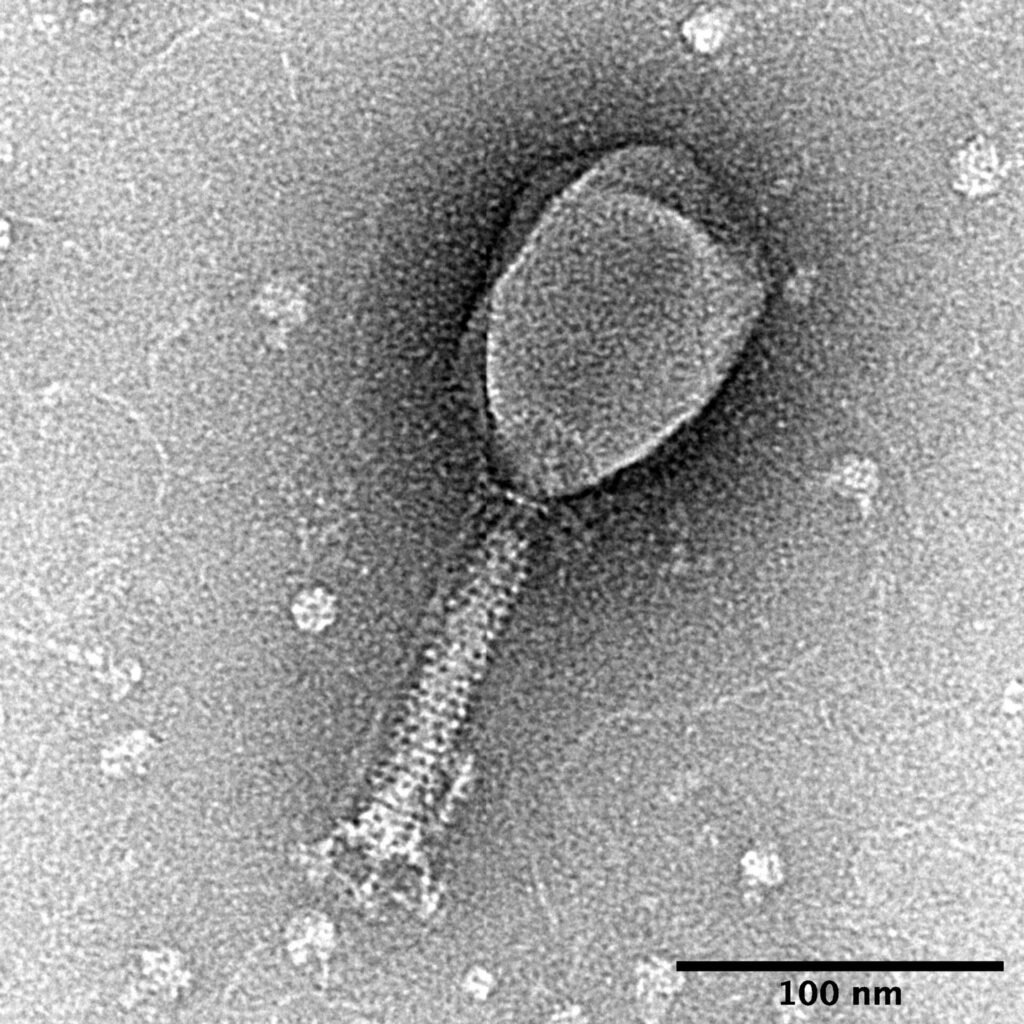
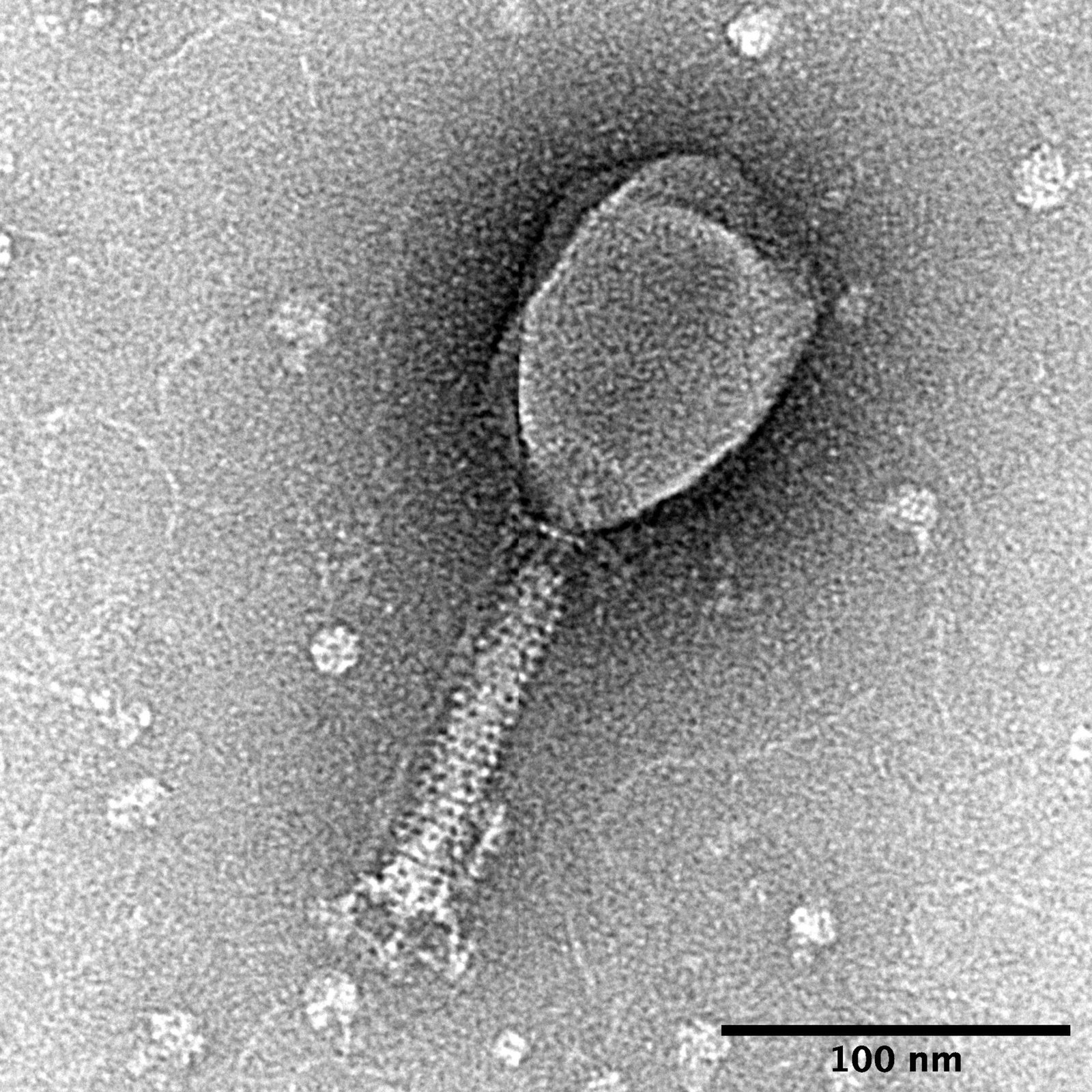
Image: “Enterobacteria phage T2 transmission electron micrograph” by SnaxMikn, Wikimedia Commons, licensed under CC BY-SA 4.0. Resized for web.